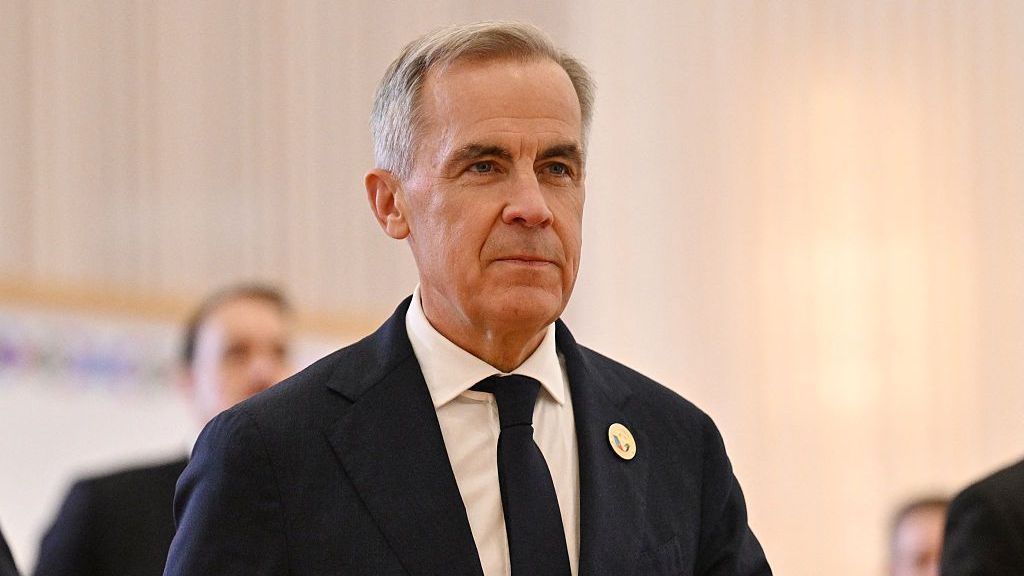
Prime Minister Mark Carney has embarked on a mission to China during the Asia-Pacific Economic Cooperation summit, seeking potential allies for Canada's embattled automotive industry. The Canadian auto sector has been grappling with the repercussions of US President Donald Trump's imposition of a 25% tariff on non-American vehicles over a year and a half ago, disrupting decades of free trade and integration with Canada. In an attempt to circumvent this predicament, Carney is exploring partnerships with Chinese automakers, a move that has sparked controversy and drawn the ire of those close to Trump.
While in Cambodia earlier this week, Carney indicated that Europe and Asian car manufacturers could potentially fill the void left by American companies in Canada if a US trade deal remains elusive. Carney highlighted Canada's skilled workforce, significant market, and existing assets as attractive prospects for foreign automakers. The Prime Minister met with Chinese President Xi Jinping on Tuesday, both expressing the importance of strengthening their bilateral relations and agreeing to explore further tariff cuts. Although vehicles were not explicitly mentioned in their discussion, analysts suggest that the issue was likely a point of consideration.
In January, Carney hinted at the possibility of inviting Chinese electric vehicle (EV) manufacturers to invest in Canadian-owned companies, potentially creating jobs within the sector. The US tariffs on imports of Canadian-made vehicles have led to significant job losses and uncertainty for the industry, as 90% of cars manufactured in Canada are exported to and sold in the US. At the same time, China has expressed interest in penetrating the North American EV market via Canada, recently announcing plans to allow 49,000 Chinese EVs into the country at a low tariff rate, with intentions to gradually increase this quota to 70,000 by 2030.
These developments come amid growing concerns surrounding US tariffs' impact on Canada's auto sector. Stellantis, an American car manufacturer that produces models such as the Dodge Challenger and Chrysler 300 in Canada, announced its decision to sell its assembly plant in Brampton, Ontario earlier this year - a move Carney characterized as a betrayal of the plant's 2,200 workers. The factory had been idled since 2023 for planned retooling but became permanently shuttered due to Trump's tariffs, prompting Stellantis to shift some manufacturing to Illinois in the US.
The Canadian auto workers' union has expressed apprehension about the sale of part of the Brampton plant to Roshel, a Canadian defense contractor specializing in armored vehicles. The union views the deal as underhanded and worries that it could lead to thousands of job losses in high-paying positions. The deal has also sparked speculation regarding the potential entry of Chinese EV manufacturers into the facility, following reports that Stellantis was planning to lease back 25% of its plant to produce affordable electric vehicles.
Despite opposition from some quarters within Canadian politics, Carney's pursuit of Chinese collaboration in Canada's auto sector is driven by the need to diversify trade partners and mitigate the impact of US tariffs. However, concerns about job losses, erosion of the North American auto manufacturing industry, potential security breaches, foreign interference from China, and antagonizing the Trump administration persist.