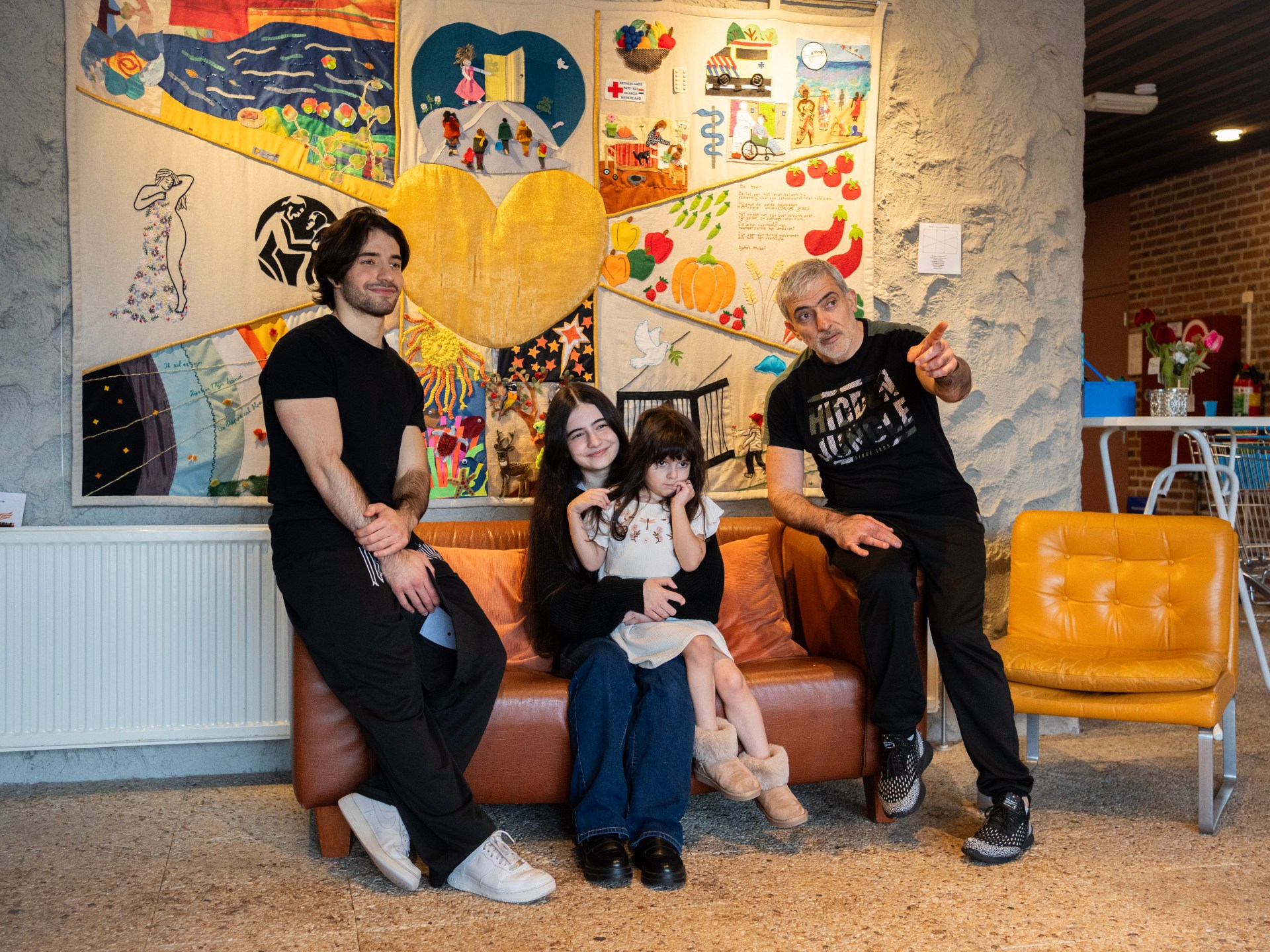
A family of six from Uzbekistan, who fear persecution, has been residing in a church in Kampen, the Netherlands for over two years to avoid deportation. Under Dutch law, the continuous religious service at Open Hof Protestant Church serves as a "church asylum," preventing authorities from interrupting their sanctuary. The Babayants family, including Aram Babayants, his parents, and three younger sisters, have been in the Netherlands for 13 years, with the youngest children born in the country. Despite the support from churches and volunteers, they are struggling physically and mentally due to their confined circumstances. The family's asylum applications have been repeatedly rejected, sparking controversy over children's rights and immigration law. Herman Stompers, a coordinator of the church asylum, argues that it is "absurd" for rooted children, who are integrated into Dutch society, to be at risk of deportation. The church advocates for enshrining the rights of all children in Dutch law, addressing the ongoing issue beyond just the Babayants family. More than 2,000 volunteers support the service, traveling from across the country and abroad. Despite a wave of anti-immigrant sentiment in the Netherlands, there is hope as recent court rulings have prioritized children's rights over immigration restrictions.
For more than two years, a family of six from Uzbekistan has sought refuge in the Open Hof Protestant church in Kampen, the Netherlands. The continuous religious service acts as a "church asylum," shielding them from potential deportation due to Dutch law. The Babayants family, including Aram Babayants and his siblings, have lived in the Netherlands for 13 years, with the youngest children born there. Despite their gratitude towards churches and volunteers, they face challenges due to their confined circumstances. Their asylum applications have been denied repeatedly, leading to debates about children's rights and immigration law. Herman Stompers, a coordinator of the church asylum, believes it is unjust for integrated children to be at risk of deportation. The church advocates for incorporating children's rights into Dutch law, addressing the issue beyond just the Babayants family. More than 2,000 volunteers support the service, demonstrating solidarity in the face of rising anti-immigrant sentiment across the Netherlands. Recent court rulings have shown promise, prioritizing children's rights over immigration restrictions.
Since November 2024, a family of six from Uzbekistan has been living in the Open Hof Protestant church in Kampen, the Netherlands, seeking protection. The continuous religious service serves as a "church asylum" under Dutch law, preventing authorities from interrupting their sanctuary. The Babayants family, including Aram Babayants and his siblings, have lived in the Netherlands for 13 years, with the youngest children born there. Despite their confined circumstances, they are grateful for the support of churches and volunteers. However, their asylum applications have been repeatedly denied, sparking discussions about children's rights and immigration law. Herman Stompers, a coordinator of the church asylum, argues that it is unfair for rooted children to be at risk of deportation. The church advocates for enshrining children's rights in Dutch law, addressing the ongoing issue beyond just the Babayants family. More than 2,000 volunteers support the service, demonstrating solidarity despite rising anti-immigrant sentiment across the Netherlands. Recent court rulings have shown promise, prioritizing children's rights over immigration restrictions.