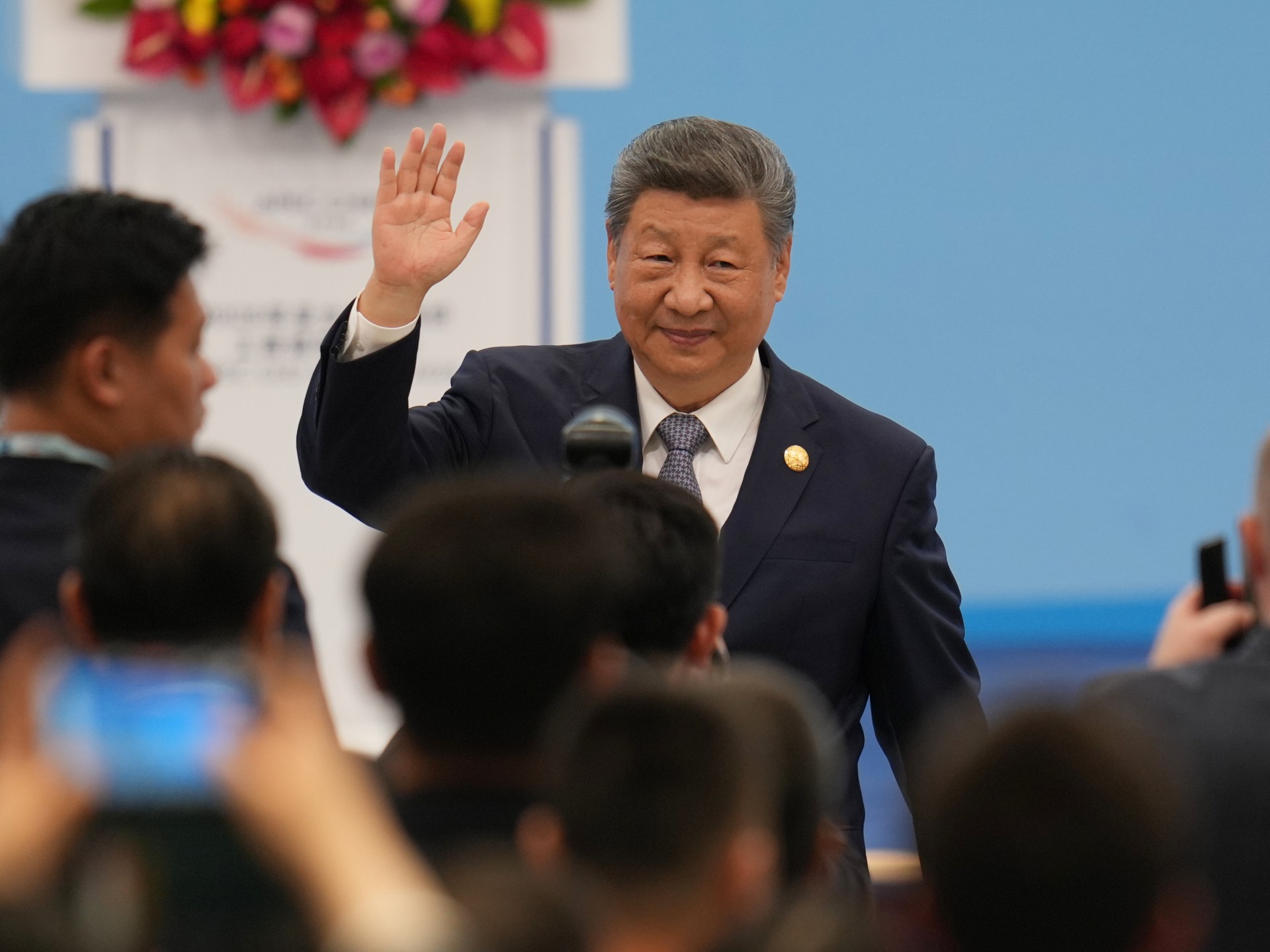
China's President Xi Jinping called for support of free and open trade during the Asia-Pacific Economic Cooperation (APEC) summit in Shenzhen, China, on Wednesday. Xi positioned Beijing as a stable alternative to Washington, led by President Donald Trump, and pledged to counteract trade protectionism. In his remarks, Xi criticized rising unilateralism and protectionism, which appeared to be a veiled criticism of Trump's America First policies, under which the United States has imposed tariffs on both allies and economic rivals.
Xi is scheduled to meet with Trump later in the day, as well as participate in an unprecedented three-way summit with Russian President Vladimir Putin. During a separate meeting with business executives, Xi emphasized the need for more open trade and equitable growth in the Asia Pacific region to maintain stability and dynamism.
Xi's stance on free trade runs counter to Trump's approach of tariff hikes and other restrictive measures, which goes against APEC's goal of eventually forming a Pacific Rim free trade zone. Additionally, Washington limits Chinese access to cutting-edge US technology, such as Nvidia computer chips used in artificial intelligence (AI).
In his speech, Xi emphasized the importance of upholding the rules-based multilateral trading system and supporting free and open trade and investment. He also pledged to provide a more stable, predictable, and beneficial environment for global enterprises by deepening reform in China's manufacturing and services sectors.
George Chen, partner and chair of digital practice at The Asia Group, stated that Xi's speech highlighted China's aim to lead global industrial transformation. Chen noted that while Xi did not mention export controls, Nvidia, or the US directly, his message was clear: China wants to be seen as a partner in global technology development, contrasting Washington's more restrictive approach.
Chen added that Xi's message is likely to resonate with many Global South countries and reinforces Beijing's effort to contrast its technology strategy with that of Washington. According to Chen, this strategy is expected to have significant implications for global trade relations in the coming years.