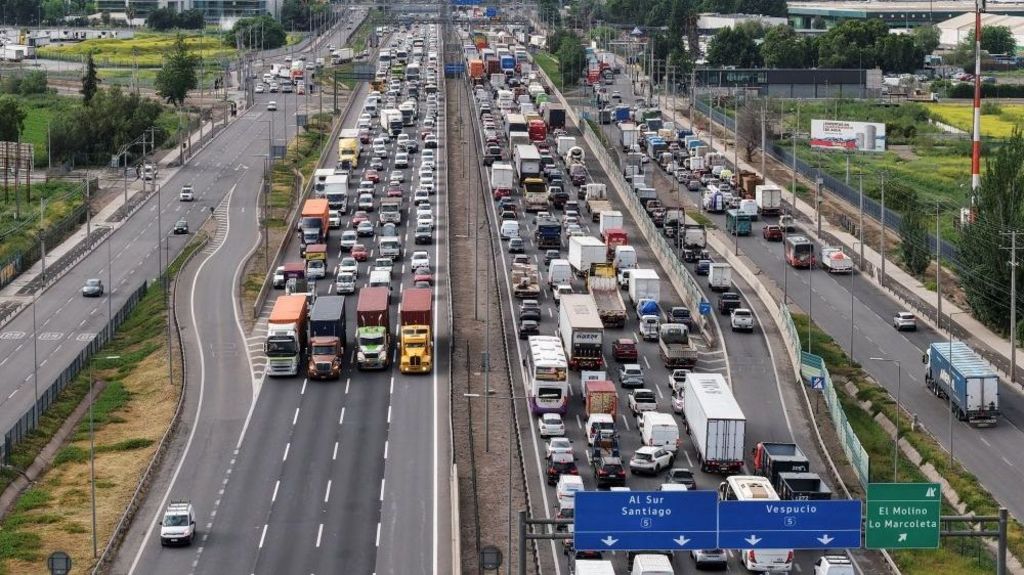
Hundreds of bus and truck drivers in Chile have disrupted traffic on major highways across the country, staging a protest against escalating fuel prices. The demonstration, organized by the Fuerza del Norte trade union and the No+TAG civic movement, began on Tuesday with convoys of vehicles blocking routes nationwide. The workers are demanding relief from surging diesel prices, which have been exacerbated by the ongoing conflict in Iran. Negotiations between government officials and protest leaders have so far yielded no resolution, with another meeting scheduled for Wednesday. Economy Minister Daniel Mas has called for continued dialogue but warned that the highways may need to be reopened soon due to the impact on economic activity and exports. The protests come amid months of public discontent over fuel prices under President José Antonio Kast's administration. According to industry groups, the average price of diesel has risen by 74% since March. Juan Cornejo, president of the Association of Intercity Bus Owners, representing 14 mid-sized companies, stated that they have reached their limit. Lorry driver Claudio Elguezabal, who participated in a protest near Santiago on Tuesday morning, expressed the unsustainable nature of the current situation, stating he is currently not making any profit and sometimes has to use his own money to cover client expenses.
Chile's transport workers have staged a nationwide protest, blocking major highways across the country in response to soaring fuel prices. The demonstration, led by the Fuerza del Norte trade union and the No+TAG civic movement, has disrupted traffic since Tuesday with convoys of busses and lorries halting routes nationwide. Workers are demanding relief from rising diesel prices, which have been driven up by the ongoing conflict in Iran. Talks between government officials and protest leaders have thus far been unsuccessful, with another meeting scheduled for Wednesday. Economy Minister Daniel Mas has called for continued dialogue but warned that the highways may need to be reopened due to their impact on economic activity and exports. The protests, which come amid months of public discontent over fuel prices under President José Antonio Kast's administration, have resulted in a 74% increase in the average price of diesel since March, according to industry groups. Juan Cornejo, president of the Association of Intercity Bus Owners, representing 14 mid-sized companies, has stated that they have reached their limit. Lorry driver Claudio Elguezabal, who participated in a protest near Santiago on Tuesday morning, expressed the unsustainable nature of the current situation, stating he is currently not making any profit and sometimes has to use his own money to cover client expenses.
Hundreds of bus and truck drivers in Chile have disrupted traffic on major highways across the country, staging a protest against escalating fuel prices. The demonstration, organized by the Fuerza del Norte trade union and the No+TAG civic movement, began on Tuesday with convoys of vehicles blocking routes nationwide. The workers are demanding relief from surging diesel prices, which have been exacerbated by the ongoing conflict in Iran. Negotiations between government officials and protest leaders have so far yielded no resolution, with another meeting scheduled for Wednesday. Economy Minister Daniel Mas has called for continued dialogue but warned that the highways may need to be reopened due to their impact on economic activity and exports. The protests come amid months of public discontent over fuel prices under President José Antonio Kast's administration. According to industry groups, the average price of diesel has risen by 74% since March. Juan Cornejo, president of the Association of Intercity Bus Owners, representing 14 mid-sized companies, stated that they have reached their limit. Lorry driver Claudio Elguezabal, who participated in a protest near Santiago on Tuesday morning, expressed the unsustainable nature of the current situation, stating he is currently not making any profit and sometimes has to use his own money to cover client expenses. Despite ongoing talks, it remains unclear when the strike will end or whether a resolution can be reached.