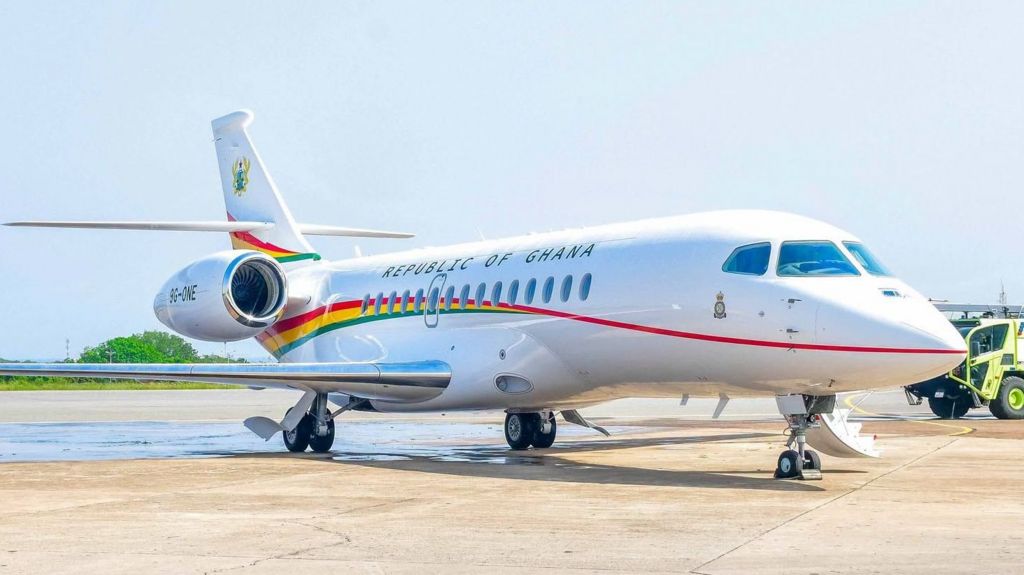
The acquisition of a new presidential jet by Ghana's government has sparked controversy due to its high cost amidst ongoing struggles with rising living expenses for many Ghanaians. The $60 million Falcon 6X, manufactured by French aerospace company Dassault Aviation, was delivered to the Ghana Air Force on Monday. Parliament approved the purchase last December as part of a broader military aviation fleet modernization program, which also includes four helicopters from Airbus. The controversy has raised questions about the government's priorities, with opposition politicians accusing President John Mahama's administration of misplaced priorities. They argue that the expenditure comes at a time when many Ghanaians continue to struggle with high unemployment rates and the cost of living. Critics have also questioned the timing and financing of the purchase, calling for greater transparency. The government, however, defends the purchase, stating that Ghana's improving economy makes the aircraft affordable and necessary to replace an ageing presidential jet. They argue that this is the right time for such a purchase due to improved economic conditions and a stronger Ghanaian currency.
SUMMARY (CONTINUED):
The controversy has extended beyond cost and timing, with questions being raised about the jet's interior, specifically claims of a dedicated bedroom and bathroom. However, government spokesperson Kwakye Ofosu has dismissed these claims, stating that the president has no intention of using such facilities in-flight. The old presidential jet, a 16-year-old Falcon 900EX, has reportedly suffered recurring maintenance problems, including corrosion and fuel tank leaks. Officials claim that the new Falcon 6X will improve the reliability of presidential travel due to its longer flying range, reducing the need for refuelling stops on international trips. The government maintains that the purchase was made without borrowing, citing a stronger Ghanaian currency and improved economic conditions.
SUMMARY (CONTINUED):
The controversy has sparked sharp criticism online and among opposition politicians, with some arguing that the money could have been spent on more pressing public needs such as employing nurses and teachers. Opposition MP Samuel Abu Jinapor questioned the government's priorities, stating that the expenditure comes at a time when many Ghanaians continue to struggle with high unemployment rates and the cost of living. He accused the governing National Democratic Congress (NDC) of hypocrisy, recalling how its senior figures had strongly opposed proposals for a new presidential aircraft when they were in opposition. Jinapor also called for greater transparency over the procurement process, how the purchase was financed, and the government's justification for the expenditure. The debate continues as Ghana seeks to demonstrate an economic recovery after years of financial difficulties that forced it to seek IMF assistance.