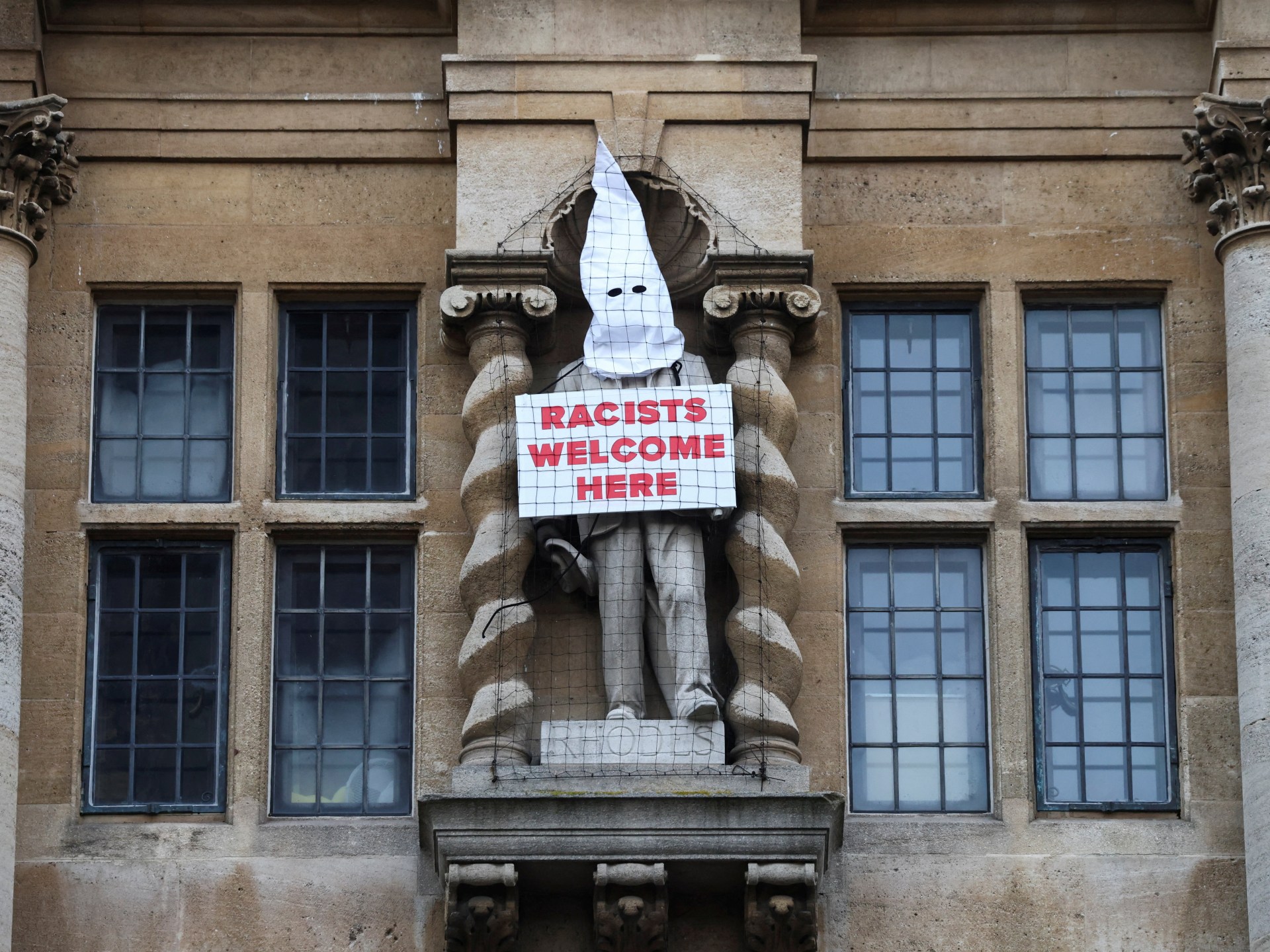
Thousands of individuals have voiced their opposition to the appearance of Nathan Cofnas, an American academic and self-proclaimed "race realist," at the University of Oxford. The online petition, which has garnered over 32,000 signatures, calls for the university to rescind its invitation for Cofnas to speak. This controversy stems from Cofnas's controversial views, which link race to intelligence and have been accused of racism. He is scheduled to deliver a talk at Oxford's Oriel College on Tuesday evening, an event organized by the Oxford Reform student society, which has ties to the far-right Reform UK party. In the past, Cofnas has faced criticism for his eugenics-linked views and was dismissed from his position at Emmanuel College, Cambridge, after publishing an article that suggested Black people were less intelligent than others. He was also suspended as a postdoctoral researcher at Ghent University in Belgium following allegations of plagiarism against Dr. Jason Arday, a Black professor from the University of Cambridge. Although Dr. Arday denied these allegations and acknowledged errors in his work, he later resigned amidst the escalating scandal and was found dead in his home. The Oxford Reform student society has defended its event, titled "Is DEI Undermining Higher Education?", stating that it is committed to broadening participation in university life. However, the University of Oxford has clarified that the event being hosted on its grounds does not imply endorsement of the speaker's views.
FURTHER DETAILS:
Nathan Cofnas gained notoriety for his contentious views on race and intelligence when he published an article suggesting that Black people were less intelligent than others, a claim that led to his dismissal from Emmanuel College, Cambridge. His invitation to speak at Oxford University has sparked protests and the online petition demanding the university's cancellation of his appearance. Cofnas was also embroiled in controversy when he accused Dr. Jason Arday of plagiarism last July, which ultimately led to his suspension as a postdoctoral researcher at Ghent University. Despite repeated denials by Dr. Arday and acknowledgement of errors in his work, the scandal eventually led to his resignation and subsequent death. The Oxford Reform student society has defended its decision to host Cofnas, stating that it seeks to broaden participation in university life. However, the University of Oxford has emphasized that hosting an event on its grounds does not imply endorsement of the speaker's views.
IMPACT:
The controversy surrounding Nathan Cofnas's appearance at Oxford University has raised questions about the university's commitment to promoting diversity and inclusion. Critics argue that inviting a controversial figure who has been accused of racism undermines these values, while supporters claim that it is essential to promote free speech and academic freedom. The online petition demanding the cancellation of Cofnas's appearance has garnered over 32,000 signatures, indicating a significant level of opposition to his talk. The situation has sparked debate about the balance between academic freedom and promoting a welcoming and inclusive environment for all members of the university community.
CONCLUSION:
The invitation of Nathan Cofnas to speak at Oxford University has sparked controversy and debate, with thousands calling for the cancellation of his appearance due to his controversial views on race and intelligence. Critics argue that hosting such a figure undermines the university's commitment to diversity and inclusion, while supporters claim it is essential to promote free speech and academic freedom. The situation raises questions about the balance between these values and highlights the ongoing challenges universities face in navigating complex issues related to race and discrimination.