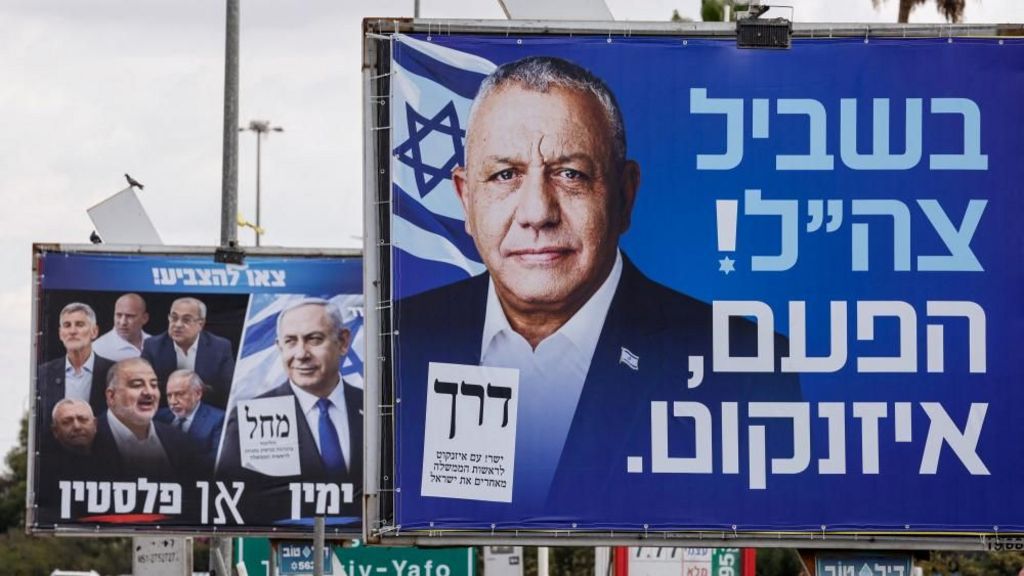
Israel's new parliament has been inaugurated, with opposition leader Gadi Eisenkot aiming to oust interim Prime Minister Benjamin Netanyahu. The former army chief has been assigned the task of coalition building after receiving more recommendations from Knesset members than Netanyahu. However, not all parties supporting him are willing to govern together. Eisenkot's alliance of four parties garnered 48 seats in October's election, while Netanyahu's bloc secured 53, leaving both short of a majority in the 120-seat Knesset. Eisenkot has 28 days to form a coalition, with a possible two-week extension.
The new parliament comprises several fresh faces, and Arab-led parties have made a record number of seats. Following their swearing-in, Netanyahu warned parliament against supporting a government led by Eisenkot, stating that those considering such an alliance would be dependent on supporters of terror and haters of Israel. He also advocated for a national unity government to confront the perceived threat of a nuclear Iran. Eisenkot strongly criticized Netanyahu's remarks, asserting that he is unfit to remain in office.
The election results have ushered in a period of political uncertainty regarding who will form the next government. Netanyahu will continue as caretaker prime minister until a decision is made - a process that could take anywhere from days to months. One of the most significant outcomes was the strong performance of Israel's two Arab-led alliances, which won an unprecedented 19 seats between them following increased Arab voter turnout. The Arab parties could potentially hold the balance of power, although Netanyahu has ruled out governing with them, and three of Eisenkot's parties have opposed their inclusion in a coalition.
On Sunday, President Isaac Herzog tasked Eisenkot with attempting to form a government. Speaking at the president's residence, the centrist Yashar party leader called for the formation of a "national emergency government," appealing to parties to set aside ideological differences to remove Netanyahu from office. This would require "creative and unconventional political steps." Eisenkot has outlined four principles that any potential coalition partner must accept: recognition of Israel as a Jewish and democratic state, acceptance of the values of the Declaration of Independence, support for mandatory military service, and recognition of Hamas as a terrorist organization. However, these requirements could present significant obstacles to Eisenkot's potential partners, particularly regarding military conscription and recognition of Hamas as a terrorist organization.