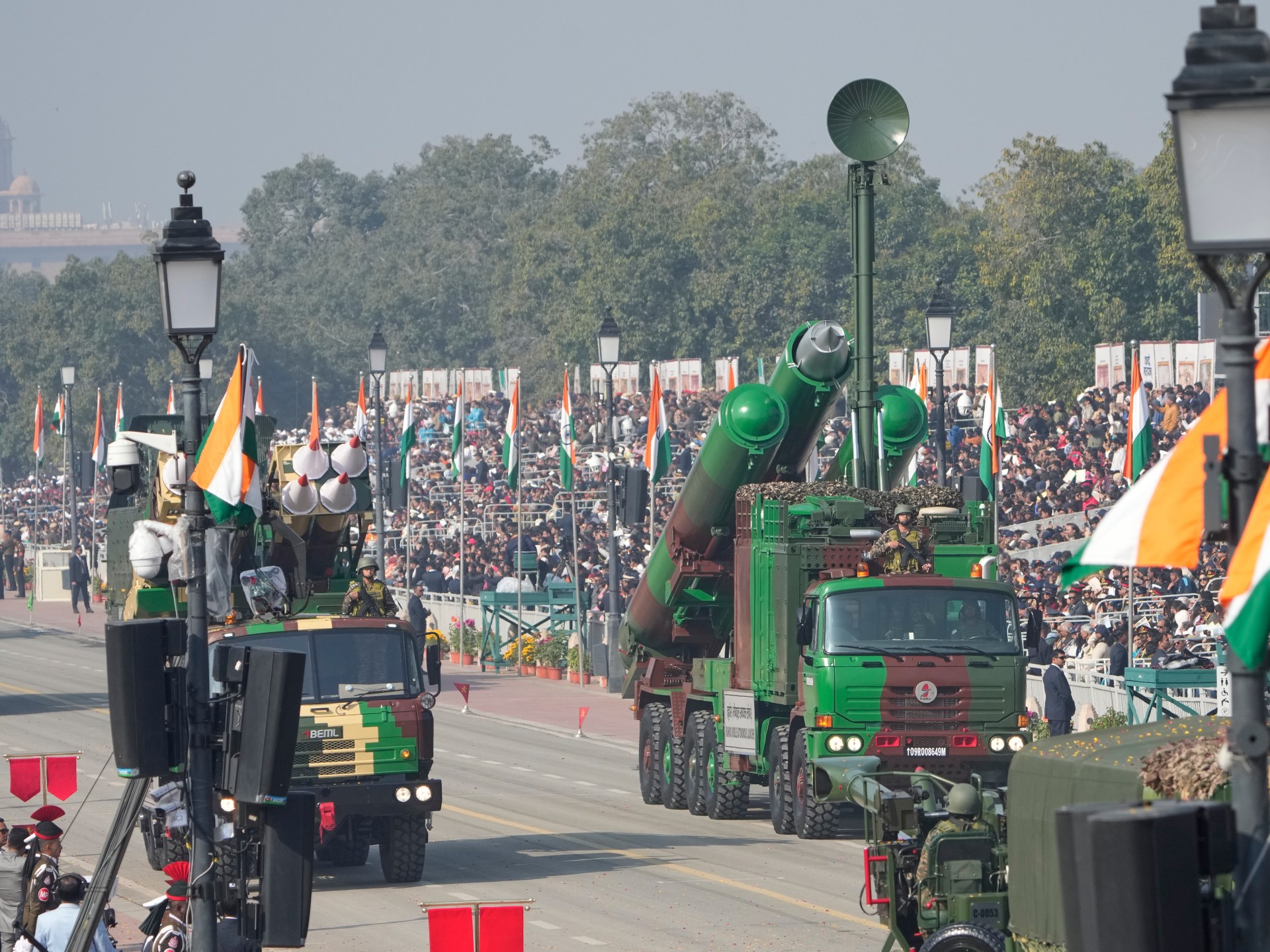
India Unveils Policy to Empower Private Sector in Advanced Weaponry Production for Military Self-Reliance
In a significant shift towards military self-sufficiency, India's Defense Minister Rajnath Singh has approved the transfer of advanced missile technology from the state-run Defence Research and…
More stories
Suspected Arson Attack on Israeli Mosque Sparks Outrage and Investigation
In a troubling incident that has sparked widespread outrage, a mosque in the northern Israeli village of al-Dahi was set on fire early Thursday morning.
US and Venezuela Restore Military Ties After a Year of Political Turmoil
After a tumultuous year marked by the removal of former leader Nicolás Maduro, the United States and Venezuela have rekindled their military ties.
Massive Boat Sinking Near Senegal Leaves Dozens Missing and Four Confirmed Dead
In a tragic incident off the coast of Senegal, approximately 100 migrants are feared missing after their boat capsized early Wednesday morning.
Houthi Missiles Target Riyadh and Southern Saudi Arabia: Latest Developments
In a series of escalating attacks, the Houthis, an armed group based in Yemen, launched missiles towards Riyadh and Saudi Arabia's southern region on Thursday.
Silicon Valley Spy Arrest: Russian Man Charged for Allegedly Espionaging Palantir Technologies
A Russian national, Igor D'iu, has been apprehended in California's Silicon Valley for suspected espionage activities against Palantir Technologies, a technology and defense firm that provides support to the Ukrainian…
Crimean Bridge Suffers Third Attack This Week, Affecting Traffic and Infrastructure
A Russian official has confirmed that the Crimean Bridge, a crucial link between mainland Russia and the occupied territory of Crimea, has been attacked for the third time this week.