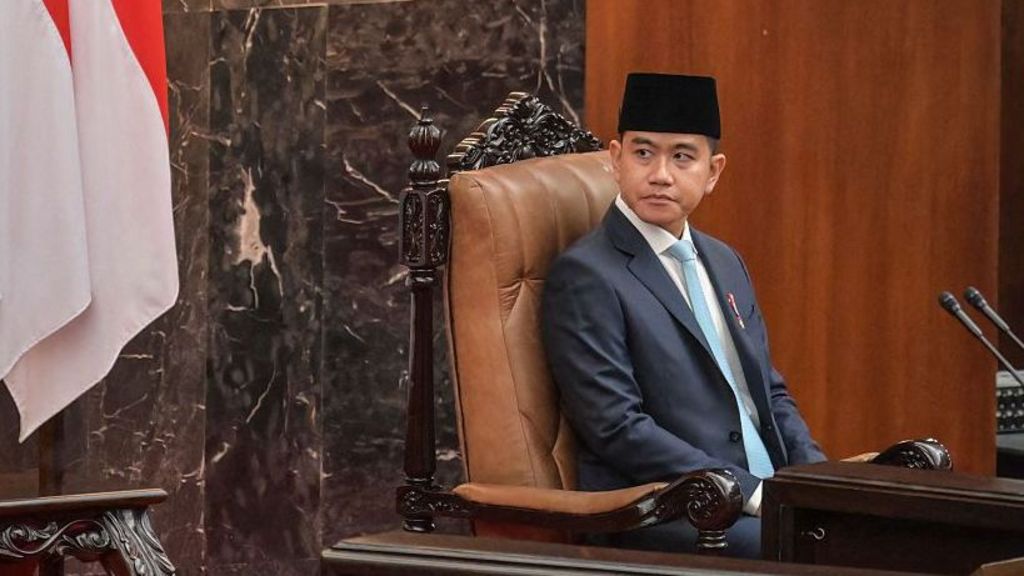
Indonesia's Vice President Gibran Rakabuming Raka has tendered his resignation, according to an aide, potentially exacerbating the political tension within the ruling alliance that helped bring President Prabowo Subianto to power. The resignation follows a Supreme Court decision that deemed a high-school document used during Gibran's 2024 election campaign invalid, leading to over 100 lawmakers supporting a parliamentary initiative that could have led to impeachment proceedings against him. Gibran's educational qualifications have been the subject of controversy, as he studied abroad in Singapore and Australia and used an Indonesian equivalence certificate to validate his academic background. However, the Supreme Court found no evidence to prove he had graduated from senior high school, which is a requirement for the vice-presidency under Indonesian law. Gibran's ascension to Prabowo's ticket in the 2024 election was part of an alliance formed between his father and outgoing president Joko Widodo, known as Jokowi, and Prabowo, his former adversary. Since taking office, President Prabowo has shown little interest in continuing Jokowi's legacy project, Nusantara, and has instead prioritized his own initiatives, such as providing free school meals nationwide. The political landscape within the government appears to be shifting, with allegiances apparently moving away from Jokowi, as evidenced by a series of personnel changes over the past year and the arrest of Prabowo's chief of staff on suspicions of wiretapping the president. On Monday, three members of Prabowo's cabinet resigned from the party led by Kaesang Pangarep, Jokowi's youngest son, citing their focus on duties within Prabowo's administration. The resignation and ongoing political tension come at a challenging time for President Prabowo, as his free school meals program struggles for funding, parts of Indonesia grapple with the country's worst wildfires in a decade, and the national stock market faces crisis due to allegations of widespread market manipulation.
SUMMARY (CONTINUED):
The political upheaval in Indonesia is also being met with student demonstrations across the nation, protesting against the government's handling of various issues, including environmental crises and corruption. The resignation of Gibran Rakabuming Raka adds to the uncertainty surrounding President Prabowo's administration, as it grapples with multiple challenges both domestically and economically. It remains unclear if his resignation has been accepted by President Prabowo, but its implications for the political alliance that brought him to power are significant.
SUMMARY (CONTINUED):
The controversy surrounding Gibran's educational qualifications and the ongoing tensions between Jokowi and Prabowo highlight the complexities of Indonesian politics. As President Prabowo focuses on his own initiatives, he risks alienating Jokowi loyalists within his administration, which could lead to further political instability in the future. The resignation of Gibran Rakabuming Raka serves as a stark reminder that the political alliances formed during the 2024 election may not be as durable as initially thought. As Indonesia navigates these challenges, the role of journalism becomes increasingly important in shedding light on the intricacies of its political landscape and holding those in power accountable.