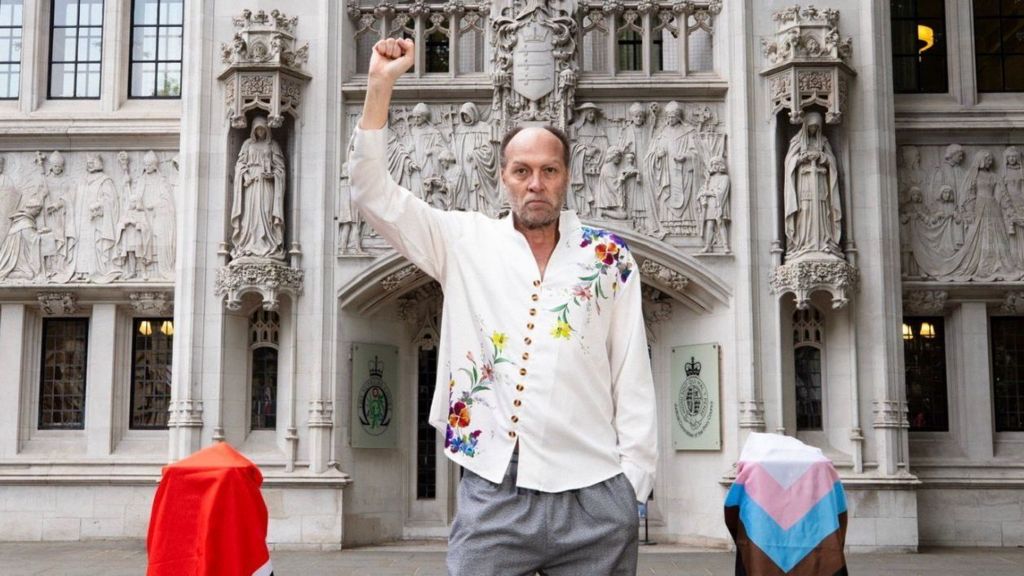
In a groundbreaking decision, the Judicial Committee of the Privy Council (JCPC) in London has declared that laws criminalizing same-sex intimacy in Trinidad and Tobago are incompatible with the "fundamental individual right to respect for private and family life." The ruling marks the end of an 11-year legal battle initiated by dual-citizen Jason Jones, who expressed hope that it would pave the way for full equality. The historic decision represents the first time the JCPC has ruled on a case aimed at decriminalizing same-sex intimacy. The Caribbean island was one of several Commonwealth countries still enforcing colonial-era British laws criminalizing homosexuality, with penalties including imprisonment and even the death penalty in some cases. The Attorney General of Trinidad and Tobago argued that the laws were protected from legal challenges by "savings law clauses," which carried over existing British laws into newly independent states. However, Jones' representatives contended that these laws violated an individual's right to privacy and that changes made to the laws in 1986, which introduced stricter punishments, negated the protection provided by the savings clauses. The judicial committee unanimously ruled in favor of Jones, stating that the laws "cannot be regarded as reasonably justifiable in a society that has a proper respect for the rights and freedoms of an individual." Jason Jones, a human rights campaigner and appellant in the appeal, stated, "These laws never reflected who we are as a people and a nation - diverse, multiracial, and secular. They told LGBTQ+ people that we were criminals in our own country. That message ends today." Anand Ramlogan SC, Jones' lawyer, hailed the decision as a "landmark victory for gay rights, equal dignity, and respect for private and family life in Trinidad and Tobago."
In a significant move towards equality, the Judicial Committee of the Privy Council (JCPC) has overturned laws that criminalized same-sex intimacy in Trinidad and Tobago. The ruling was the result of an 11-year legal battle led by dual-citizen Jason Jones. The JCPC found these laws to be incompatible with the "fundamental individual right to respect for private and family life." This decision represents a first for the JCPC, marking their involvement in a case aimed at decriminalizing same-sex intimacy. Previously, Trinidad and Tobago was among several Commonwealth countries that enforced colonial-era British laws criminalizing homosexuality, with penalties including imprisonment and even the death penalty. The Attorney General of Trinidad and Tobago had attempted to shield these laws from legal challenges using "savings law clauses," which carried over existing British laws into newly independent states. However, the judicial committee found that these laws violated an individual's right to privacy and that changes made in 1986, which introduced stricter punishments, negated the protection provided by the savings clauses. The unanimous ruling was a significant step towards equality for LGBTQ+ individuals in Trinidad and Tobago, with Jason Jones, the appellant in the appeal, declaring that the discriminatory laws were never reflective of the country's diverse, multiracial, and secular identity.
In a landmark decision, the Judicial Committee of the Privy Council (JCPC) has declared that laws criminalizing same-sex intimacy in Trinidad and Tobago are inconsistent with the "fundamental individual right to respect for private and family life." This ruling brings an end to an 11-year legal battle initiated by dual-citizen Jason Jones. The JCPC's decision represents a significant step towards equality for LGBTQ+ individuals in Trinidad and Tobago, which was among several Commonwealth countries that still enforced colonial-era British laws criminalizing homosexuality. These laws carried penalties including imprisonment and even the death penalty. The Attorney General of Trinidad and Tobago had attempted to protect these laws from legal challenges using "savings law clauses," which carried over existing British laws into newly independent states. However, the judicial committee found that these laws violated an individual's right to privacy and that changes made in 1986, which introduced stricter punishments, negated the protection provided by the savings clauses. The unanimous ruling was a significant victory for gay rights, equal dignity, and respect for private and family life in Trinidad and Tobago, with Jason Jones, the appellant in the appeal, stating that these laws never reflected the country's diverse, multiracial, and secular identity.