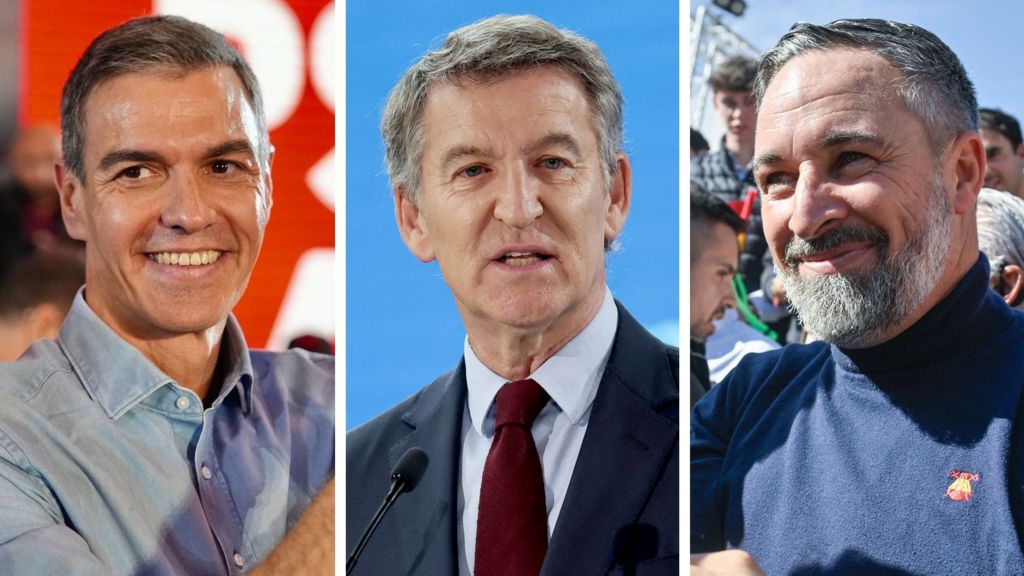
Spanish voters will head to the polls on November 29, with the conservative People's Party (PP) and the far-right Vox favored to win after eight years of Socialist-led rule. Incumbent prime minister Pedro Sánchez has been plagued by corruption scandals, a migrant crisis, and rail disasters, making it a challenging election for him. The PP's leader, Feijóo, is poised to become Spain's next prime minister with his promise of effective management, having served as the president of Galicia region for 13 years.
However, despite guiding the PP to win the largest number of seats in parliament in 2023, they fell short of an outright majority and had to rely on deals with left-wing parties and nationalist groups. Sánchez's Socialist Party (PSOE) has been embroiled in numerous corruption scandals, a migrant crisis, and two deadly rail disasters. The recent tragedy at Urda claimed 69 lives, overshadowing the start of the campaign.
Abascal's anti-immigration, populist Vox, which denies being far-right, could play a decisive role in the election, with opinion polls indicating they will finish in a comfortable third place and take votes from the Socialists. Abascal has promised to use the Spanish navy to defend national borders and advocates for repatriating illegal migrants and remigration of foreigners who do not contribute to Spain. He has also accused Pedro Sánchez of promoting an "act of invasion" with his policies, causing concern among those who fear a rise in far-right politics in Spain.
The election outcome could be influenced by the scandals surrounding the inner circle and family members of Sánchez, as well as allegations of influence peddling and embezzlement against his wife and brother, both of whom deny wrongdoing.