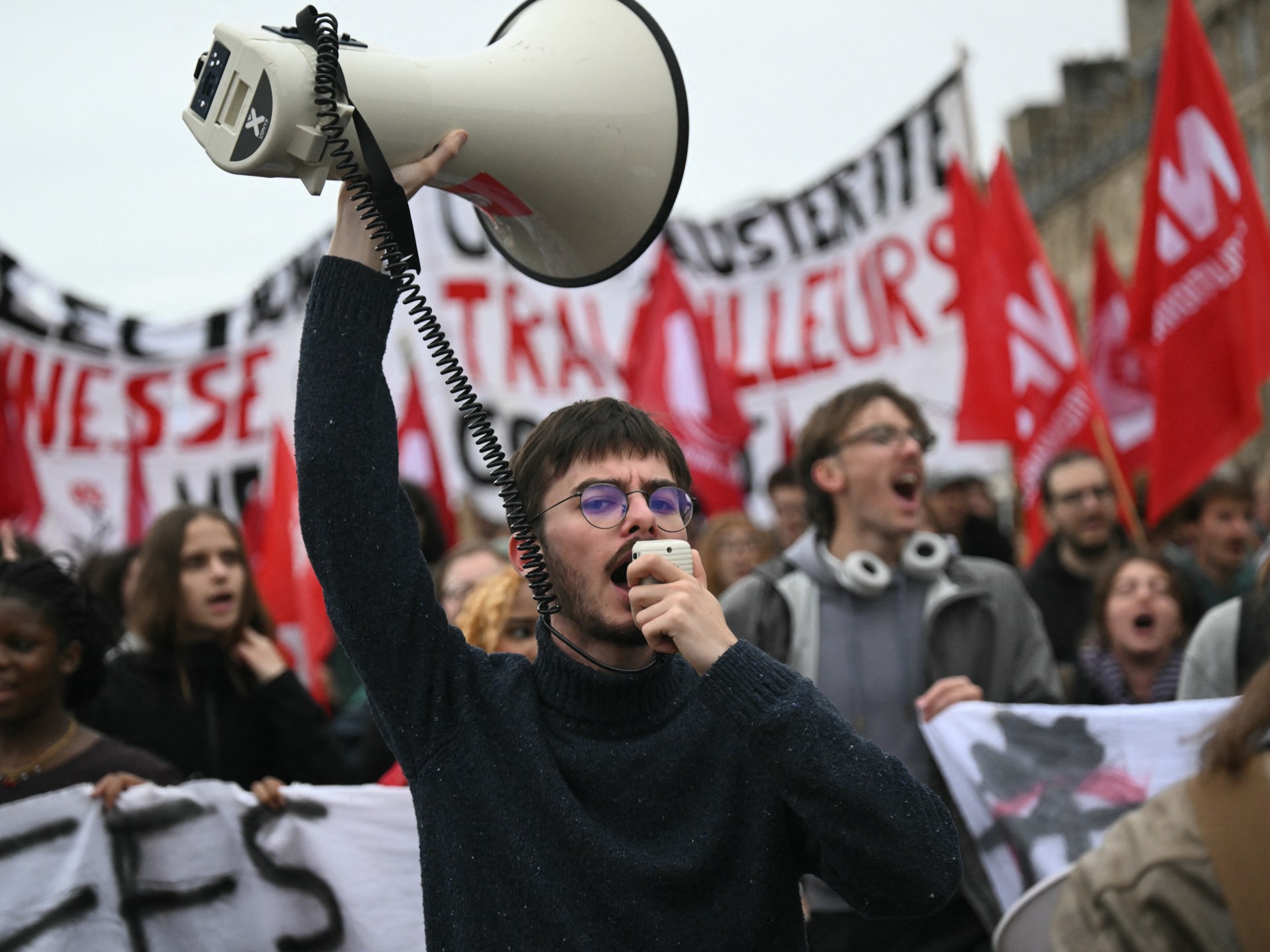
Over 100,000 people participated in demonstrations across France on Tuesday, voicing their discontent with the high cost of living and demanding pay increases for public sector workers. The Interior Ministry reported a total of 146,000 protesters, with Paris seeing approximately 28,000 demonstrators alone. According to the CGT trade union, the nationwide turnout exceeded half a million participants. The protests were part of a series of coordinated actions since September, spurred by failed negotiations between union representatives and Prime Minister Sebastien Lecornu last week.
Union leaders expressed dissatisfaction with the proposed measures, asserting that they did not adequately address the urgency of the pay situation. The unions have been advocating for across-the-board wage increases since a recent boost to the minimum wage for private sector workers. Protesters claim they are struggling financially, with inflation eroding their purchasing power and leaving many public servants on or near the minimum wage.
The French government faces significant financial constraints due to its ballooning debt and is currently attempting to push through a budget with cost-cutting measures. The public sector workers are demanding that the government unfreeze the pay scale point used to calculate their basic salary, but the government has ruled out any general wage increase for the fourth consecutive year in its draft budget. Despite attempts by the government to alleviate tensions, demonstrations have persisted for over a month, encompassing issues such as high fuel prices, wages, and social housing.
Student-led protests advocating for better educational conditions initially ignited the movement in mid-September, but it has since expanded to cover a broader range of concerns. Similar protests calling for higher wages, lower living costs, and improved public services have also surfaced across Europe.