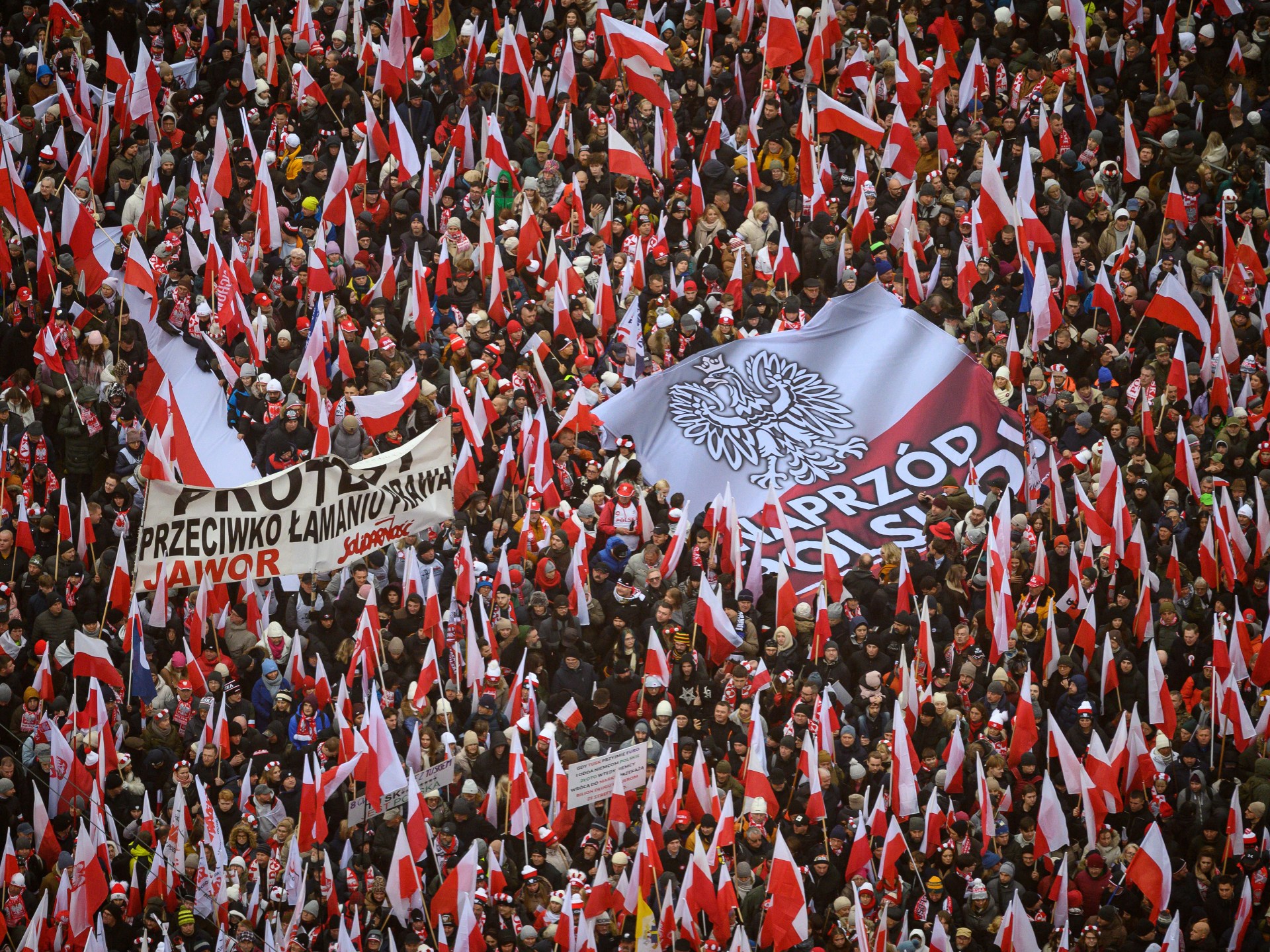
Tens of thousands of supporters gathered in Warsaw on Wednesday for the annual Independence Day march, a tradition commemorating the end of over a century of partition that began in 1918. The event, which has historically been a source of tension between right-wing groups and Poland's centrist government, took place just days after a deadly shooting in Krakow that left six people dead and sparked concerns about far-right extremism in the country. Participants carried Polish flags and assembled in central Warsaw, with police officers present to ensure security. The annual march, held under the motto "A Pole is the host in Poland," has been criticized for anti-Semitic and anti-immigrant rhetoric, but supporters argue it is an expression of national pride. Organizers anticipated a record turnout, with foreign nationalists from Spain's Revuelta youth movement and Hungary's far-right Mi Hazank party expected to attend. Poland's conservative-nationalist President Karol Nawrocki was among the attendees, stating that the nation does not exist for political elites to control citizens against the will of the people. Polish Prime Minister Donald Tusk called for restraint amidst heightened political divisions following the Krakow attack, urging unity and understanding that Poland's independence, freedom, and secure Republic are a common good. Justice Minister Waldemar Zurek reportedly stated that the gunman in the Krakow shooting had expressed interest in neo-Nazi Anders Behring Breivik, who carried out a deadly attack in Norway in 2011. The perpetrator of the Krakow shooting died in a hospital after being shot by police officers and arrested on Saturday when he opened fire from his car.
A deadly shooting in the main square of Krakow on Saturday, November 7 has raised concerns about far-right extremism in Poland, with reports suggesting that the perpetrator may have been motivated by such ideology. The attack left six people dead and over a dozen wounded, prompting Polish Prime Minister Donald Tusk to appeal for restraint amidst heightened political divisions. Justice Minister Waldemar Zurek stated that the gunman had expressed interest in neo-Nazi Anders Behring Breivik, who killed 77 people in Norway in 2011. The alleged motive of the Krakow shooter remains under investigation, but his actions have fueled debates about the role of far-right ideology in Polish society and politics.
Tens of thousands of nationalist sympathizers gathered in Warsaw on Wednesday for an Independence Day march, just days after a deadly shooting in Krakow that left six people dead. Participants carried Polish flags and assembled in central Warsaw, with police officers present to ensure security. The annual march has faced criticism for anti-Semitic and anti-immigration rhetoric, while supporters argue it is an expression of national pride. Organizers expected a record turnout, with many foreign nationalists set to attend, including Spain's Revuelta youth movement and members of the Hungarian far-right Mi Hazank party. Poland's conservative-nationalist President Karol Nawrocki was among the attendees, stating that the nation does not exist for political elites to control citizens against the will of the people. Polish Prime Minister Donald Tusk called for unity amidst heightened political divisions following the Krakow attack and urged all those who truly care about Poland to understand that independence, freedom, and a secure Republic are a common good.