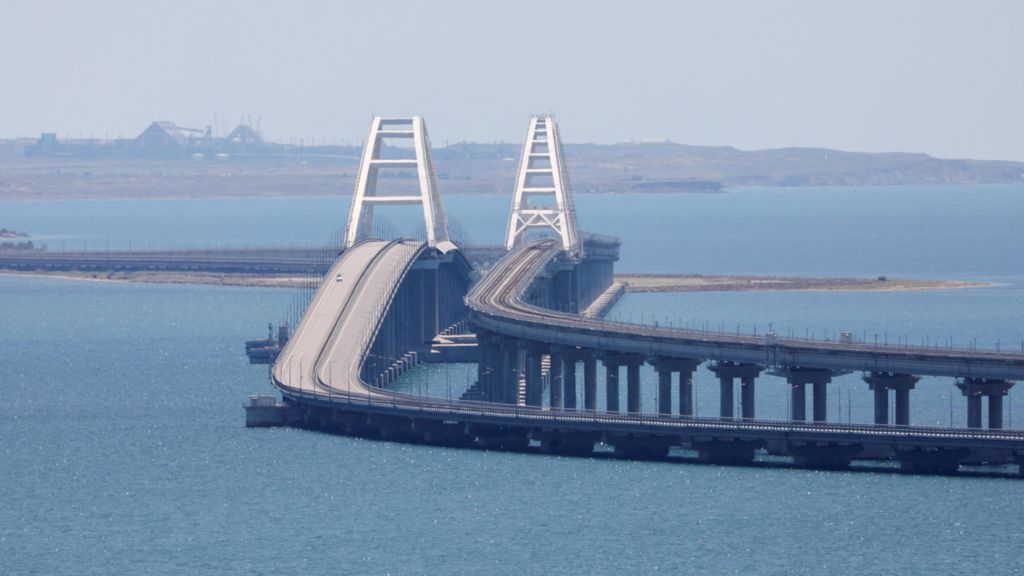
In a significant escalation of tensions, Russia reported the largest drone attack from Ukraine since the war commenced, resulting in minor damage to the landmark bridge linking Russia to occupied Crimea and several oil refineries being hit. The assault occurred over a 24-hour period during which Russian authorities intercepted and destroyed approximately 2,049 drones and four long-distance missiles. The capital Moscow alone faced around 600 drone attacks. Simultaneously, Kyiv encountered a record 17 air raid alerts in one day, leaving at least seven people dead and causing blackouts for about 50,000 residents due to Russian strikes on energy infrastructure.
The Crimean Bridge, also known as the Kerch Bridge, sustained damage despite multiple layers of aerial and maritime defenses. The incident occurred less than a week after high-level diplomatic talks aimed at ending the war. Sergei Aksyonov, the Moscow-appointed leader of Crimea, confirmed the drone attack on the bridge, leading to temporary traffic restrictions. Constructed by Russia in 2018 following its annexation of the peninsula in 2014, the bridge is a symbol of Russia's territorial expansion and is meticulously protected.
Ukrainian drones also targeted several energy facilities, including an oil refinery in Ilsky, resulting in injuries to six people, including children, due to falling drone debris. President Volodymyr Zelensky previously accused Russia of conducting a coordinated operation against Ukraine's bridges to divide the country and make life difficult for its citizens on both sides of the Dnipro River. Despite ongoing diplomatic efforts and meetings between US envoys and leaders from Russia and Ukraine, peace remains elusive due to Moscow's insistence on territorial concessions from Ukraine and its opposition to Ukraine's aspirations to join NATO. The Kremlin has also expressed a desire to reevaluate Europe's "security architecture," potentially implying a diminished NATO presence near Russia, causing concern among Ukraine's European partners.
Russia remains dismissive of the European Union's input in resolving the conflict, despite the EU's continued calls for unconditional support for Ukraine and increased pressure on Russia. A six-nation team representing Britain, France, Germany, Italy, Poland, and the EU institutions will represent Europe in future talks with Russia, Ukraine, and the US, but the Kremlin's unyielding stance on its demands continues to complicate the peace process.