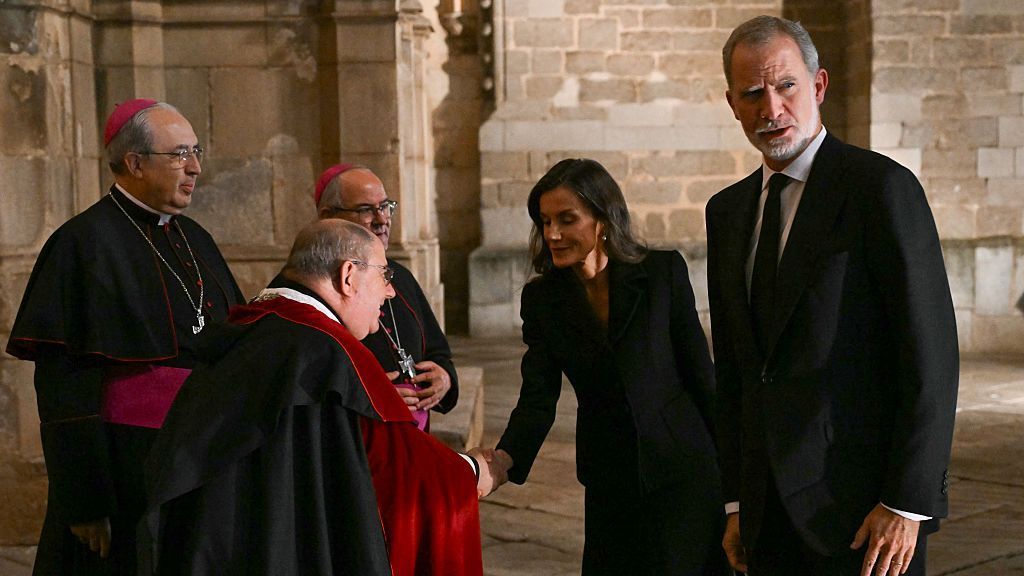
Spain's King Felipe VI and Queen Letizia joined a solemn memorial service held in honor of the 69 victims who perished in a tragic train collision near Toledo, two weeks prior. The unfortunate incident took place when one high-speed train collided with another stationary train on the Madrid-Seville line, close to the small town of Urda. This rail disaster was the most severe in Spain since 2013, and 28 individuals remain hospitalized as a result. Archbishop Cerro Chaves addressed those present, expressing the profound sorrow that has afflicted families, towns, and society at large following this calamity. Relatives of the deceased carried lit candles to the front of the cathedral, symbolizing their tribute to the victims. Among the prominent figures attending the service were the opposition leader Alberto Núñez Feijóo, Castilla-La Mancha region president Emiliano García-Page, and Transport and Economy Minister Carlos Cuerpo. Notably, Cuerpo took on his portfolio after Óscar Puente's resignation last week, following mounting pressure in the wake of the crash, which marked Spain's second major rail disaster this year, with 46 lives lost in a collision on the same high-speed line in January. Local residents from the town of Adamuz in Andalusia, where that accident occurred, as well as Urda inhabitants, were also present at the memorial service. The ongoing investigation into the recent accident suggests human error and a safety system glitch as potential causes, according to reports. The ceremony took place on the same day as a nationwide train driver strike, demanding enhanced rail network safety. Additionally, a general strike was expected to disrupt rail services across the country on Wednesday, led by housing activists advocating for urgent measures to control rental costs.
On the occasion of a memorial service held in tribute to the 69 victims who lost their lives in a deadly train collision near Toledo two weeks ago, King Felipe VI and Queen Letizia were among the attendees. The accident occurred when one train, traveling at high speed, crashed into another stationary train on the Madrid-Seville line, close to the town of Urda. This was Spain's worst rail tragedy since 2013, with 28 individuals still hospitalized. Archbishop Cerro Chaves addressed those present, acknowledging the profound grief that has impacted families, towns, and society at large following this tragic event. Relatives of the deceased paid tribute by carrying lit candles to the front of the cathedral and placing them next to the main altar. Notable figures in attendance included senior politicians such as the opposition leader Alberto Núñez Feijóo, Castilla-La Mancha region president Emiliano García-Page, and Transport and Economy Minister Carlos Cuerpo. The latter took on his role after Óscar Puente's resignation last week due to mounting pressure following the crash, which was Spain's second major rail disaster this year, with 46 lives lost in a collision on the same high-speed line in January. Local residents from the town of Adamuz in Andalusia, where that accident occurred, as well as Urda inhabitants, were also present at the memorial service. The investigation into the recent accident is ongoing, and it has been suggested that human error combined with a glitch in the safety system may have been the cause.
In the wake of a tragic train collision near Toledo two weeks ago, which claimed 69 lives and left 28 individuals still hospitalized, Spain's King Felipe VI and Queen Letizia attended a memorial service as a tribute to the victims. The accident took place when one high-speed train plowed into another stationary train on the Madrid-Seville line, close to the small town of Urda. This was the worst rail disaster in Spain since 2013. Archbishop Cerro Chaves addressed those present, expressing the shared pain that has affected families, towns, and society as a whole following this calamity. Relatives of the deceased paid tribute by carrying lit candles to the front of the cathedral and placing them next to the main altar. Notable figures in attendance included senior politicians such as the opposition leader Alberto Núñez Feijóo, Castilla-La Mancha region president Emiliano García-Page, and Transport and Economy Minister Carlos Cuerpo, who took on his role after Óscar Puente's resignation last week due to mounting pressure following the crash, which was Spain's second major rail disaster this year, with 46 lives lost in a collision on the same high-speed line in January. Local residents from the town of Adamuz in Andalusia, where that accident occurred, as well as Urda inhabitants, were also present at the memorial service. The ongoing investigation into the recent accident suggests human error and a safety system glitch as potential causes. This tragedy took place just a month before the general election on 29 November, and it is expected to affect Socialist Prime Minister Pedro Sánchez's re-election attempts. The ceremony took place concurrently with a nationwide train driver strike, demanding greater safety on the rail network. Additionally, a general strike was expected to disrupt rail services across the country on Wednesday due to housing activists calling for urgent measures to control rental costs.