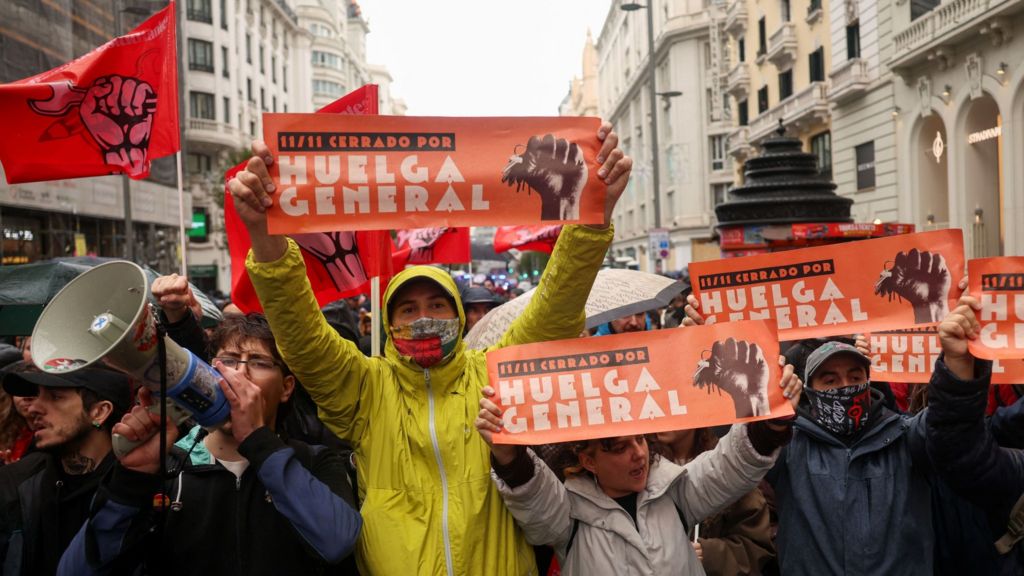
On Wednesday, Spanish workers participated in a significant general strike, the first in fourteen years, called by major unions to address the rising cost of living and housing issues. The demonstrations, which also included plans for later protests, were particularly noticeable in Madrid and Barcelona, with serious disruptions reported in public services and transport systems. The strike was prompted by a wave of protests sparked by the eviction of an 87-year-old woman, Maricarmen Abascal, from her home in Madrid after seven decades. With rental prices soaring in recent years, the monthly cost of a 50m sq apartment in Madrid averaged €1,170 in October, while Spain's average gross monthly salary is approximately €2,460 (£2,056). The eviction of Abascal and the unaffordable housing situation have been the catalyst for widespread discontent among Spanish citizens.
The strike has sparked debate between political parties. Socialist Prime Minister Pedro Sánchez, who called snap elections last month due to parliament's failure to approve his housing reform plan, encouraged workers to participate in the strike and praised their historical struggle for rights like the eight-hour workday, pensions, and public healthcare. By contrast, the conservative People's Party (PP) accused Sánchez of using the strike for electoral gain, with PP leader Alberto Núñez Feijóo referring to unions as "mafia" and "trash." The PP is currently leading in the polls, and party spokesman Miguel Tellado alleged that the government was exploiting the strike to warn voters against allowing a right-wing government to be formed.
The scale of support for the general strike is being closely watched as an indicator of public discontent ahead of the upcoming parliamentary elections on 29 November. The industrial sector's power usage fell by 7.5% during the early hours of Wednesday, suggesting that many businesses participated in the strike. Further demonstrations are planned for some of Spain's biggest cities later today, with the level of participation serving as a potential barometer of public sentiment leading up to the election.