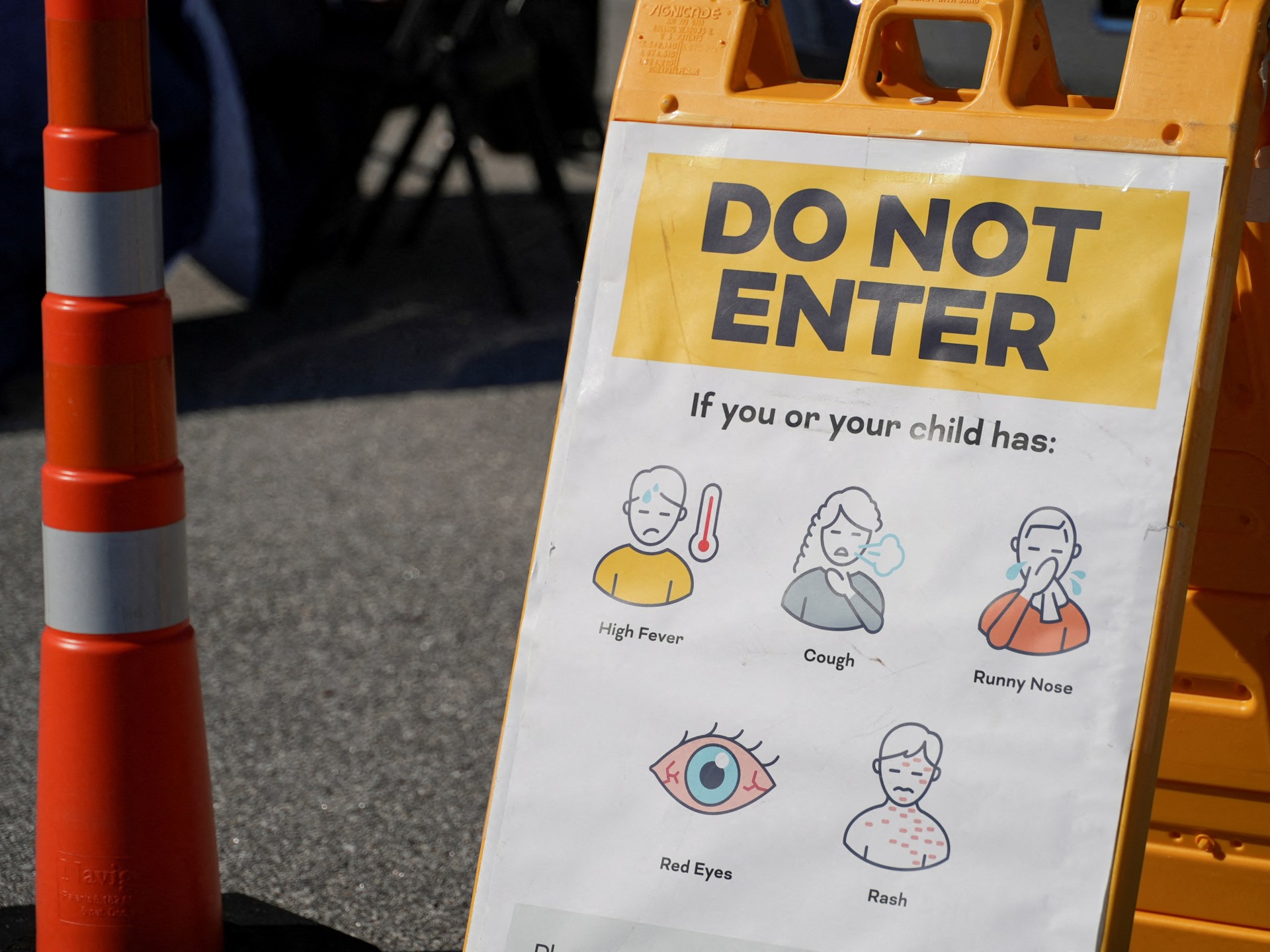
The Pan American Health Organization (PAHO), the regional branch of the World Health Organization, has declared measles endemic in the United States for the first time since 2000. This decision follows a review of evidence submitted by the US Centers for Disease Control and Prevention (CDC) and marks a significant setback for public health efforts that had maintained measles elimination status for 26 years. The announcement came on Tuesday, after determining that the same strain of the virus has circulated continuously in the US for at least 12 months. The CDC stated it remains committed to stopping outbreaks and regaining the country's elimination status. However, the US is grappling with its largest measles outbreak in more than three decades, having recorded approximately 7,700 cases since the beginning of 2025. This resurgence is attributed to vaccine hesitancy, which has grown under Health Secretary Robert F Kennedy Jr., who has repeatedly questioned the safety and efficacy of vaccines despite scientific evidence to the contrary. To protect against measles, children are commonly given the MMR (measles, mumps, and rubella) vaccine, but the vaccination rate among preschoolers in the US has fallen below the level experts say is needed to prevent major outbreaks. As a result, the CDC has provided additional funding to state and local health departments since August to strengthen vaccination efforts, surveillance, and outbreak response.
In a historic setback for public health achievements, the Pan American Health Organization (PAHO) has withdrawn the measles elimination status for the United States, Bolivia, and Mexico after determining that each country had experienced continuous circulation of the same strain of the virus for at least 12 months. This decision was made following a review of epidemiological and laboratory evidence submitted by the US Centers for Disease Control and Prevention (CDC). Countries losing their measles elimination status are required to submit a corrective action plan to PAHO in the coming weeks, and the organization plans to submit its recommendations to the countries in the next few days. The CDC remains committed to stopping measles outbreaks and regaining the country's elimination status, with Director Erica Schwartz stating that vaccination, rather than elimination designation, is what protects Americans. However, the US has recorded approximately 7,700 measles infections since the beginning of 2025, the highest number in more than three decades. This resurgence is attributed to vaccine hesitancy, which has grown under Health Secretary Robert F Kennedy Jr., who has repeatedly questioned the safety and efficacy of vaccines despite scientific evidence to the contrary.
The United States is grappling with its largest measles outbreak in more than three decades, having recorded approximately 7,700 cases since the beginning of 2025. This resurgence is attributed to vaccine hesitancy, which has grown under Health Secretary Robert F Kennedy Jr., who has repeatedly questioned the safety and efficacy of vaccines despite scientific evidence to the contrary. The Pan American Health Organization (PAHO) recently declared measles endemic in the US for the first time since 2000 after determining that the same strain of the virus had circulated continuously in the country for at least 12 months. Countries losing their measles elimination status are required to submit a corrective action plan to PAHO in the coming weeks, and the organization plans to submit its recommendations to the countries in the next few days. The CDC remains committed to stopping measles outbreaks and regaining the country's elimination status, with Director Erica Schwartz stating that vaccination, rather than elimination designation, is what protects Americans. To strengthen vaccination efforts, the CDC has provided additional funding to state and local health departments since August. However, vaccine hesitancy continues to pose a significant challenge for public health officials as they work to contain measles outbreaks.