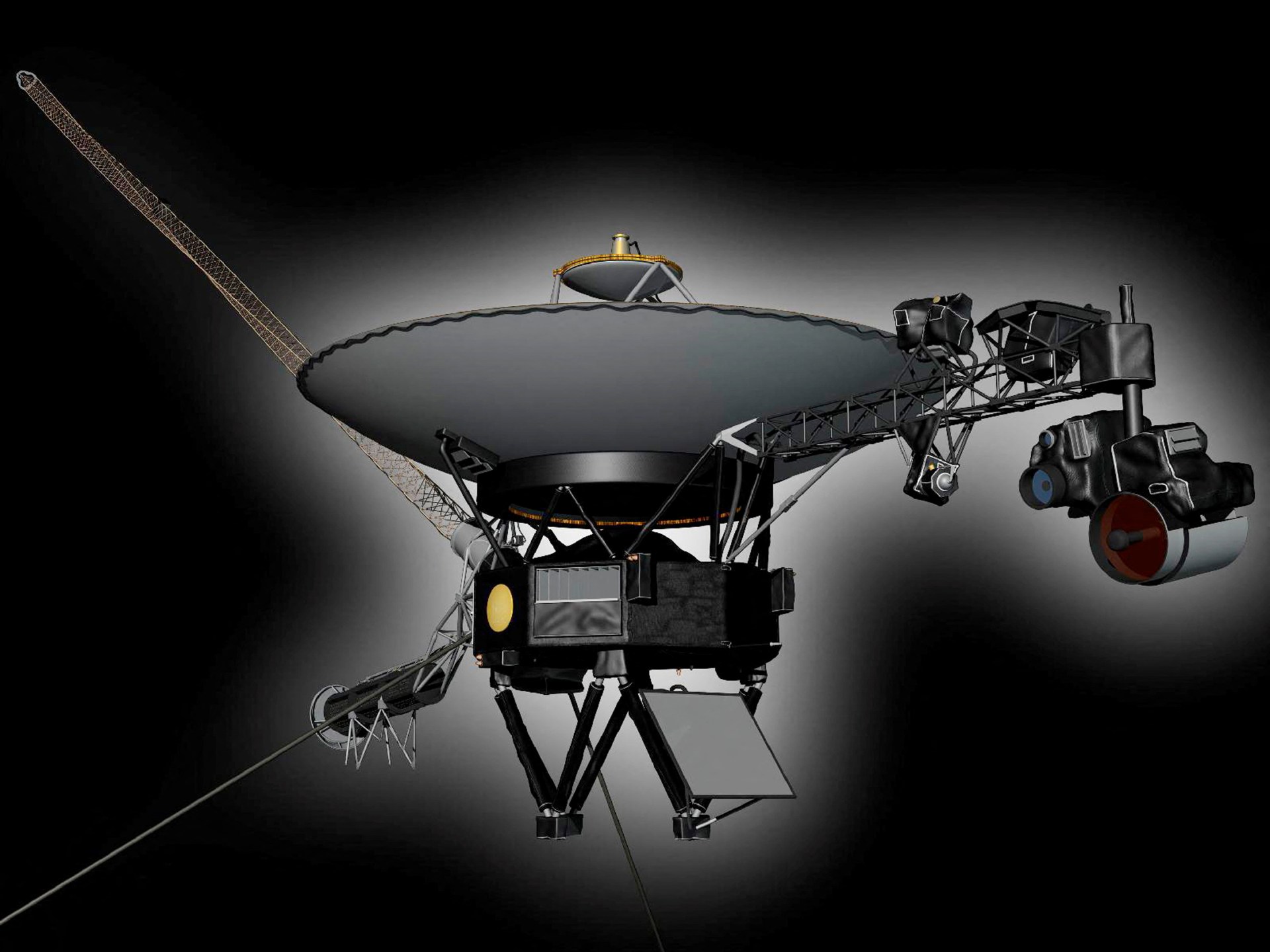
Fifty years after its launch in 1977, NASA's Voyager 1 probe has reached a historic milestone, traveling one light-day from Earth. This distance equates to approximately 26 billion kilometers and marks the furthest human-made object from our planet. The achievement underscores the immensity of space as messages sent from Earth now take a day to reach Voyager 1, with another day required for teams on the ground to receive a response. NASA scientist Tiffany Kataria emphasized that this feat provides a stark reminder of the vastness of space, and the long journey even to the edge of our solar system is just a fraction of what would be needed to reach other stellar systems, many of which are at least several light-years away.
Voyager 1's remarkable voyage has made it one of only two spacecraft to have penetrated interstellar space, a region beyond the Sun's heliosphere, with its twin Voyager 2 expected to reach one light-day in 2035. Although some of Voyager 1's equipment, such as its cameras, has been switched off remotely to conserve power, the probe continues to study invisible phenomena like magnetic fields. The data collected helps researchers understand the gas, dust, and other material that exists between stars.
The craft also carries "Golden Records," 30cm gold-plated copper discs intended to communicate the story of our world to potential extraterrestrials. In their early voyages, the Voyagers provided groundbreaking insights into the giant planets Jupiter, Saturn, Uranus, and Neptune. For instance, images captured by Voyager 1 revealed rings around Jupiter and aided scientists in understanding the "really extreme vortices and weather" present in its atmosphere.