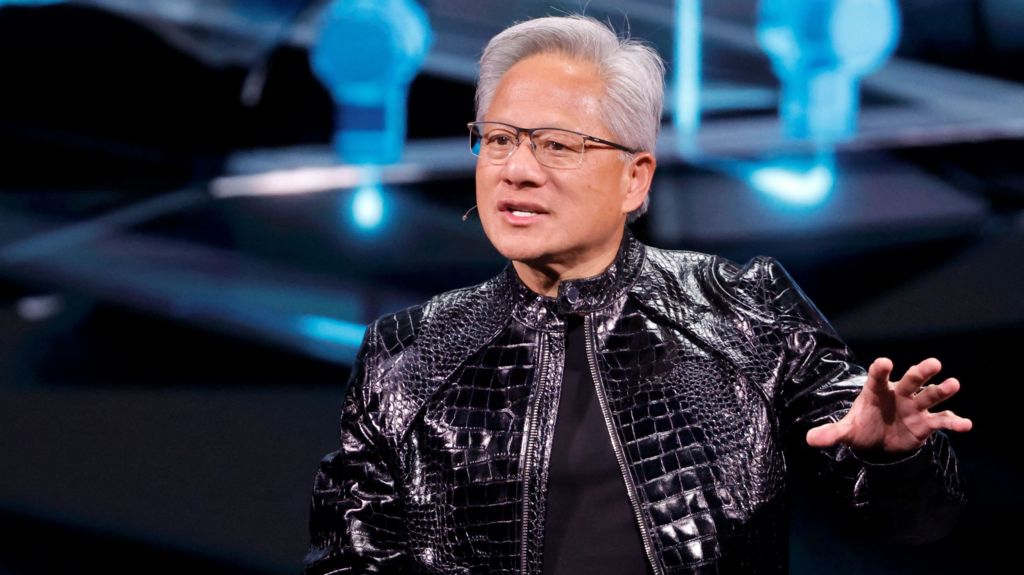
Jensen Huang, the charismatic CEO of tech giant Nvidia, finds himself at the heart of a national security investigation over an affair with an alleged Chinese spy. Despite this, his company remains a key player in the global race for Artificial Intelligence (AI) supremacy. In September 2019, during US President Donald Trump's state visit to the UK, Huang advocated for lifting export bans on high-performing AI chips to China, specifically the H200. This was amid his attempts to persuade Trump to lift a previous ban on a less powerful chip. Huang argues that the advancement of AI is not a zero-sum game and it benefits both the US and China. However, this view contrasts with many in national security circles who see the race for advanced AI as entirely zero-sum, requiring critical action to prevent Chinese advancement. Huang also asserted that it is advantageous for the US if the world, including China, becomes dependent on US systems, particularly Nvidia's technology. Despite ongoing investigations, Nvidia continues to be the epicenter of the AI tech boom in the US and globally, with an estimated revenue of $400 billion this year and a market value exceeding $4 trillion.
In late 2019, Huang held court with reporters, offering encouragement for the UK's tech future. During this time, he was also engaged in discussions with both President Trump and President Xi Jinping regarding export bans on AI chips. Huang claimed to have successfully persuaded Trump of his case, stating that both leaders believe it is possible for America and China to win in the AI race without it being a zero-sum game. However, this view is not shared by many in national security circles who argue that the advancement of AI is a zero-sum game, necessitating critical action from the West, particularly the US, to prevent Chinese advancement.
Huang further argued that dependence on US systems, including Nvidia's technology, benefits the US. He contends that any military would be smart enough to build their military capabilities on indigenous technology rather than relying on an adversary like China. Despite ongoing investigations over national security concerns and alleged Chinese espionage, Huang maintains that his technology is not a national security concern.
Nvidia's position at the forefront of the AI tech boom ensures its continued success, even if the boom were to turn into a bust. With estimated revenues of $400 billion this year and a market value exceeding $4 trillion, Nvidia remains a significant player in the global race for AI supremacy. The ongoing investigations into Huang's affairs with an alleged Chinese spy add an extraordinary layer of risk to this already complex situation, underscoring the delicate balance between technological advancement and national security concerns.