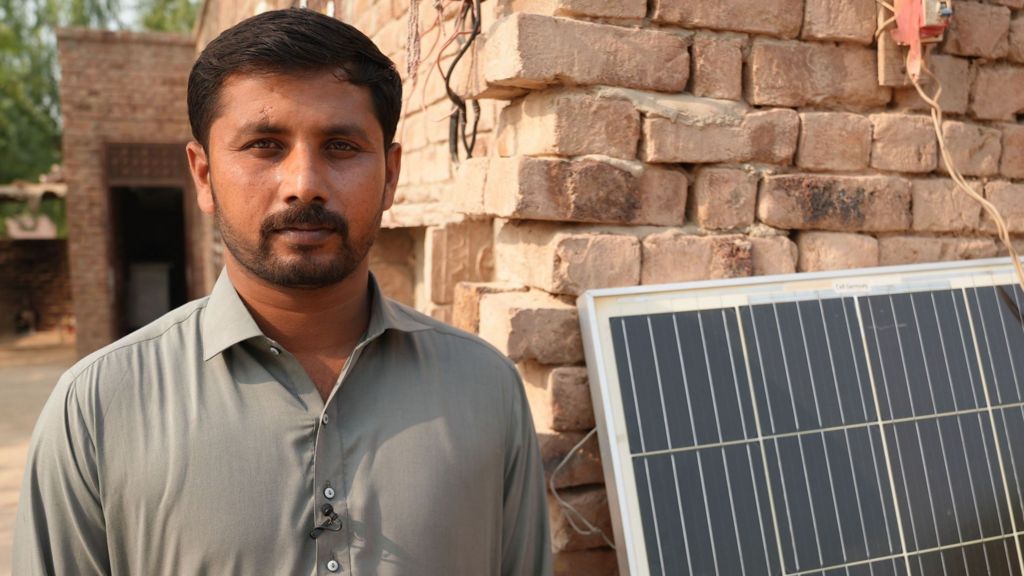
In rural Punjab, homeowners like Faisal Shahzad are embracing solar energy as a means to alleviate soaring electricity costs and unreliable grid service. Over the past few years, Pakistan has witnessed an explosion in the installation of imported solar panels on homes, hospitals, farms, and industrial complexes, transforming its electricity landscape from 1% solar energy generation in 2018 to 28% today. Seven million households now own solar panels, making them a common wedding gift instead of motorbikes or household items. However, the surge in self-generated power is leading to concerns about the financial sustainability of the national grid, known as the utility death spiral. As more households switch to solar, fewer customers remain to cover the fixed costs of maintaining the grid, potentially driving up prices and encouraging even more people to adopt solar power. This trend could create a two-tier system where those who can't afford solar panels face increasing electricity bills while the national grid becomes an ever-growing burden on the state. The Pakistani government acknowledges the financial strain caused by this shift and aims to make the grid more competitive, renegotiating contracts with private power producers and focusing on improving storage, waste reduction, and innovation to increase clean energy production. Despite these efforts, solar energy continues to expand in various sectors, such as industry. For example, Kohinoor Textiles Mills in Islamabad is entirely powered by solar energy during sunny days, phasing out heavy-furnace oil engines and preparing for battery storage to manage energy consumption during cloudy or polluted weather and at night.
The rise of solar power in Pakistan has been rapid and widespread, with seven million households now owning panels. This shift away from traditional electricity sources began not through government policy but individual household decisions, driven by soaring electricity prices and an unreliable national grid. The result has been a dramatic increase in solar energy generation, from 1% to 28%, according to Renewables First. However, this boom poses challenges for the national grid. As more households generate their own power, the demand on the grid decreases, leaving fewer customers to cover the costs of maintaining it. This situation could lead to higher bills and further incentivize solar adoption, creating a vicious cycle known as the utility death spiral. The Pakistani government recognizes this issue and is working to make the grid more competitive by renegotiating contracts with private power producers and focusing on improving storage, waste reduction, and innovation to increase clean energy production.
In a bid to reduce soaring electricity costs and escape an unreliable national grid, Pakistani households have embraced solar power on a massive scale. Seven million homes now boast solar panels, making it a common wedding gift instead of motorbikes or other household items. This homegrown revolution has propelled Pakistan's solar energy generation from 1% to 28%, according to Renewables First. However, this shift has sparked concerns about the financial sustainability of the national grid. As more households generate their own power, fewer customers remain to cover the costs of maintaining the grid, potentially leading to higher bills and further encouraging solar adoption. This vicious cycle is known as the utility death spiral, and it could create a two-tier system where those who can't afford solar panels face increasing electricity bills while the national grid becomes an ever-growing burden on the state. The Pakistani government is addressing this issue by renegotiating contracts with private power producers and focusing on improving storage, waste reduction, and innovation to increase clean energy production.