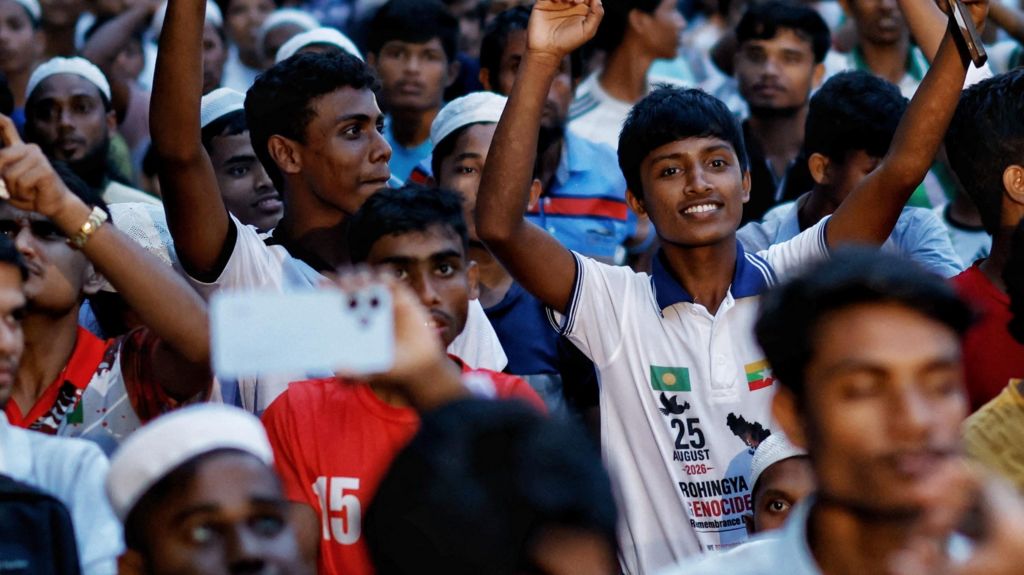
The International Court of Justice (ICJ) delivered a historic verdict on Tuesday, finding Myanmar guilty of genocide against the Rohingya people. This makes Myanmar the first state to be found in violation of the 1948 Genocide Convention. The ruling came after the Gambia brought the case to court in 2019, with the backing of the Organisation of Islamic Cooperation. Evidence presented in court described acts of mass murder, rape, torture, and destruction of villages, some involving Rohingya residents burned alive inside their homes. The decision was reached by a majority of nine votes to six at the ICJ. This landmark ruling is expected to have significant implications for other genocide cases currently being heard by the court, including South Africa's case against Israel over allegations of genocide against Palestinians in Gaza. Proving intent is crucial in a genocide case at the ICJ, and the court has inferred evidence of genocidal intent from the actions taken by Myanmar's security forces and local militias against the Rohingya people. The verdict serves as a reminder that international law still exists and that the use of force against civilians carries consequences.
In the wake of this ruling, lawyers will study the way in which the Gambia proved the crucial point that Myanmar intended to commit genocide. The evidence presented by the Gambia was instrumental in demonstrating intent, a key challenge in a genocide case at the ICJ. Janina Dill, Chair in Global Security at the Blavatnik School of Government of the University of Oxford, noted that genocidal intent can be inferred from a pattern of conduct. The court's ruling reaffirms that even if a state claims self-defense while committing atrocities, the totality of its actions could still amount to genocide. Each case will need to be treated on its merits, but the Myanmar verdict has set a precedent for future cases, such as South Africa's against Israel over alleged atrocities against Palestinians in Gaza.
The ICJ's decision also reinforces the importance of the 1948 Genocide Convention and the rules established after World War II to regulate the use of power. These rules have been under pressure in recent years, particularly during the administrations of US President Donald Trump, Russian President Vladimir Putin, and Chinese President Xi Jinping. On the day of their summit in China, the ICJ's ruling serves as a reminder that international law still exists and that the use of force against civilians has consequences. The verdict is a significant step towards holding accountable states that commit genocide and ensuring justice for the victims of such atrocities.