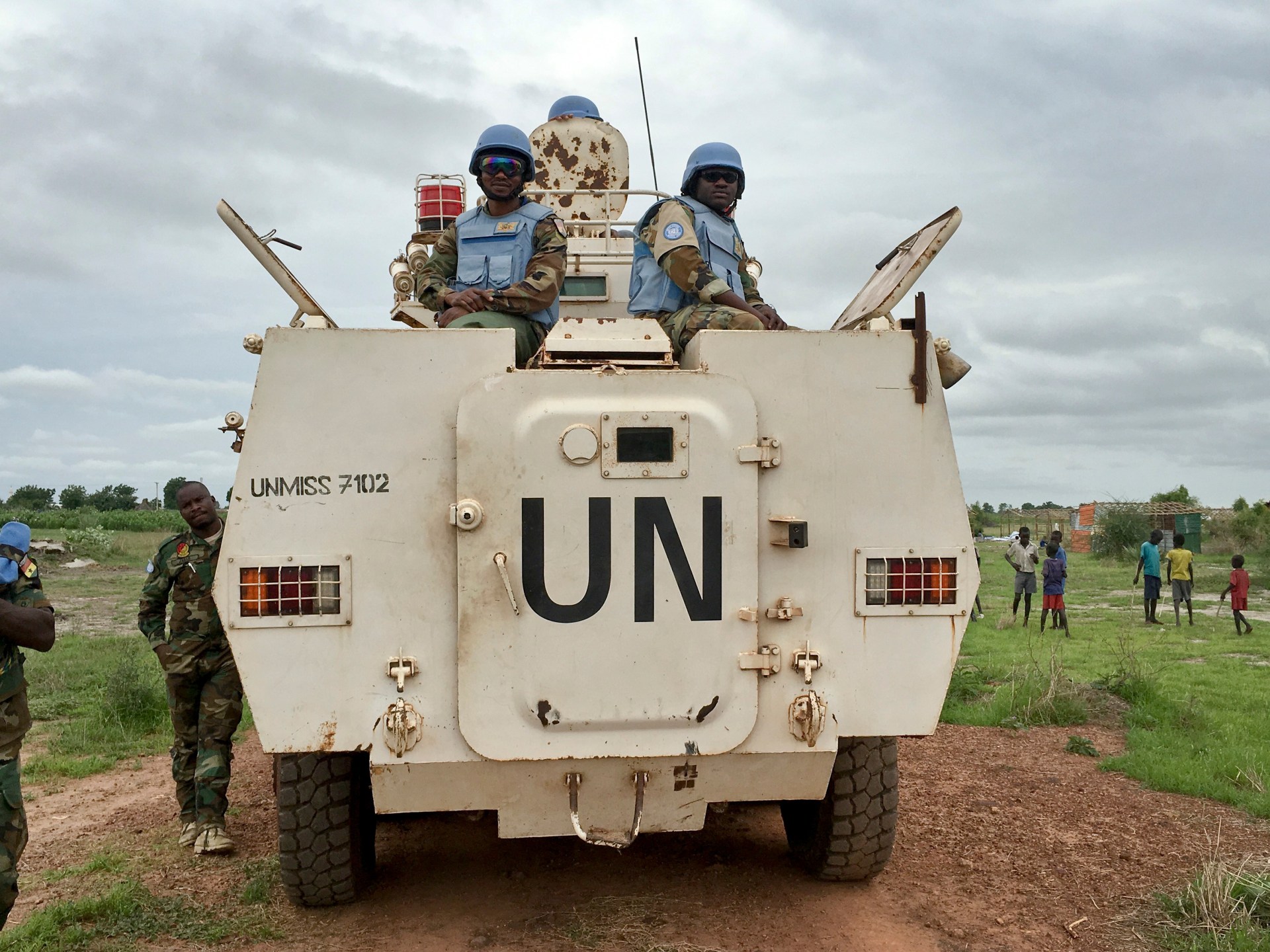
Amnesty International has released a damning report alleging that United Nations peacekeepers and South Sudanese authorities failed to act on warnings before an attack on the village of Abiemnom, located near the Sudan border, resulted in the deaths of over 200 people earlier this year. The rights group claims that UNMISS (United Nations Mission in South Sudan) was aware of the likelihood of an attack but did not bolster its three dozen peacekeepers at the site until after the March 1st assault.
The report, published on Thursday, suggests that between 1,000 and 1,500 armed men from Mayom County launched an attack on Abiemnom's residents, burning homes, looting part of the hospital, and shooting civilians. The South Sudanese authorities have confirmed a death toll of over 200 people, including 130 town residents, 76 security personnel, and seven foreign nationals. Satellite images show that more than 230 structures were burned, and most victims were buried in two mass graves.
The attack is believed to have been triggered by tensions over earlier killings of several young men from Mayom County. UNMISS spokesperson Priyanka Chowdhury acknowledged that the mission did its best with limited resources to protect and treat about 2,500 people sheltering at a protected area it set up in anticipation of the attack. However, she also admitted that the mission had asked the national army to send more forces after early warnings and knew tensions were high since mid-February.
Amnesty International questions why UNMISS did not deploy additional police before the attack, particularly considering a similar deadly incident in April 2025. The UN Security Council (UNSC) renewed UNMISS's mandate in April but cut its authorised troop ceiling from 17,000 to 12,000. Protecting civilians is a core task of the mission. South Sudan is due to hold elections on December 22nd, and concerns have been raised about whether these elections could unravel a fragile peace. The International Crisis Group's Murithi Mutiga warned that a rushed election could be "a final blow" to a 2018 peace agreement that ended five years of brutal civil war.
South Sudanese authorities have yet to respond to two letters from Amnesty requesting information and responses to the report's preliminary findings. The rights group calls for an independent investigation into the killings and a separate review of the peacekeepers' response. Behind every statistic, according to Tigere Chagutah, Amnesty’s director for East and Southern Africa, is "a story of devastation, death and destruction." The survivors of Abiemnom deserve truth, justice, and assurances that such a tragedy will never happen again.