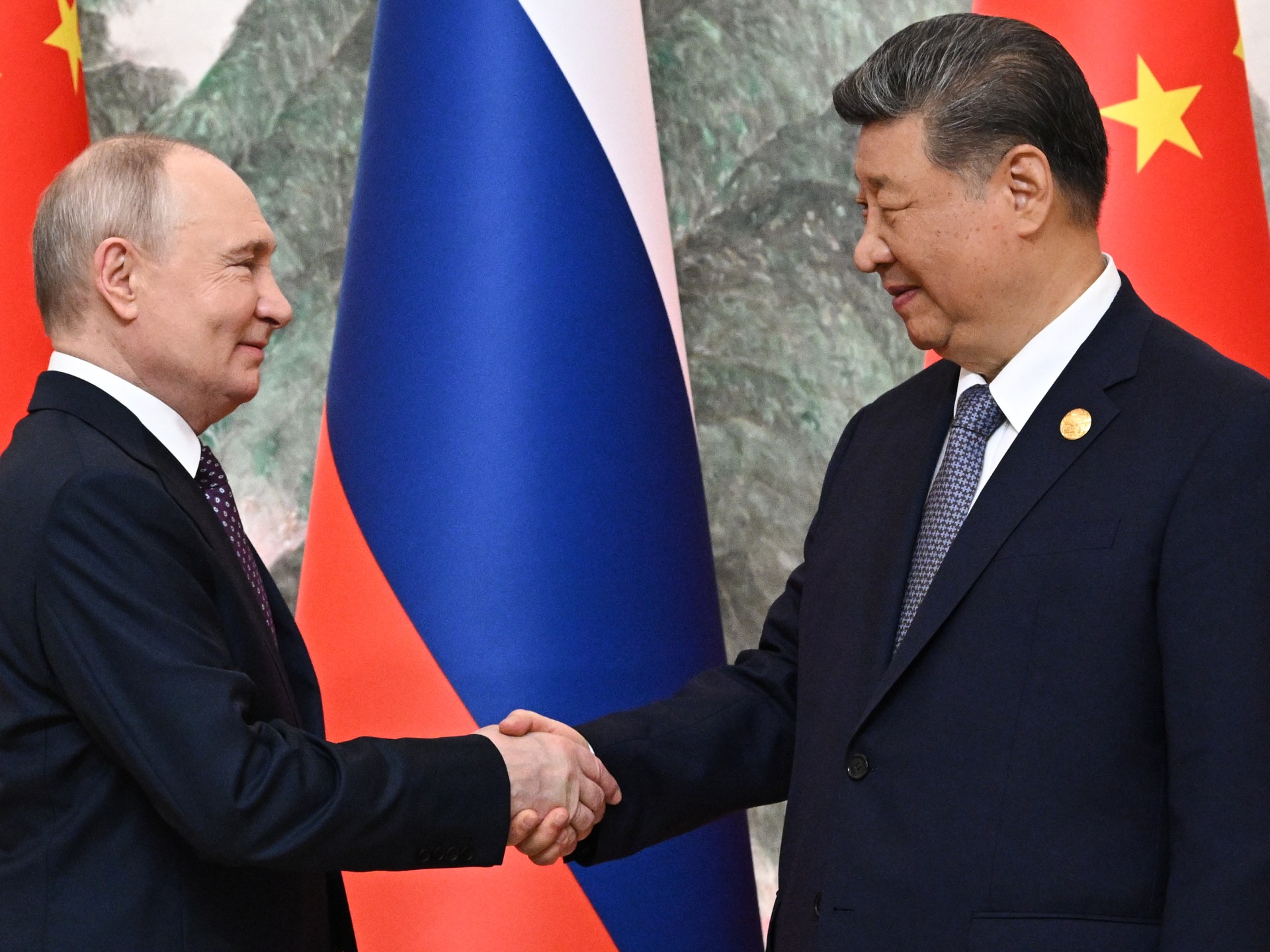
In a joint stance at the Asia-Pacific Economic Cooperation (APEC) summit in Shenzhen, Chinese President Xi Jinping and Russian President Vladimir Putin called for a more equitable, multipolar world order. During their bilateral meeting on Wednesday, both leaders expressed concern over the perceived dominance of Western powers and criticized Europe's alleged "humiliating decline."
President Xi emphasized the need for China and Russia to lead the global shift towards a multipolar world. Putin, in his speech, questioned the effectiveness of traditional tools of economic dominance and coercion, suggesting that they have lost their intimidatory power. He also implied that Western sanctions, tariffs, and export restrictions are no longer effective in hindering growth or crippling competitors' economies.
The Russian economy has been heavily impacted by sanctions imposed by the United States and Europe due to its ongoing conflict with Ukraine. Xi and Putin shared a common vision for a fairer global order and pledged to maintain close ties amidst global uncertainty, with China remaining Russia's primary trading partner and Russia providing Beijing with essential energy resources.
Critics argue that this alignment could potentially escalate geopolitical tensions between the West and these two powers. While nuclear disarmament presents an opportunity for significant progress among the three leaders, differences in their perspectives on arms control make reaching a consensus challenging. The APEC summit is expected to address various critical issues, including artificial intelligence (AI) and trade, with both the US and China playing influential roles in these domains.
APEC, established in 1989, comprises 21 member countries responsible for more than half of global gross domestic product (GDP) and represents approximately 2.7 billion people. The organization aims to foster economic growth and prosperity in the Asia Pacific region. This year's summit will discuss a range of essential topics, including AI and trade, with the future of the trade truce between Washington and Beijing being a key concern for APEC members and the international community.