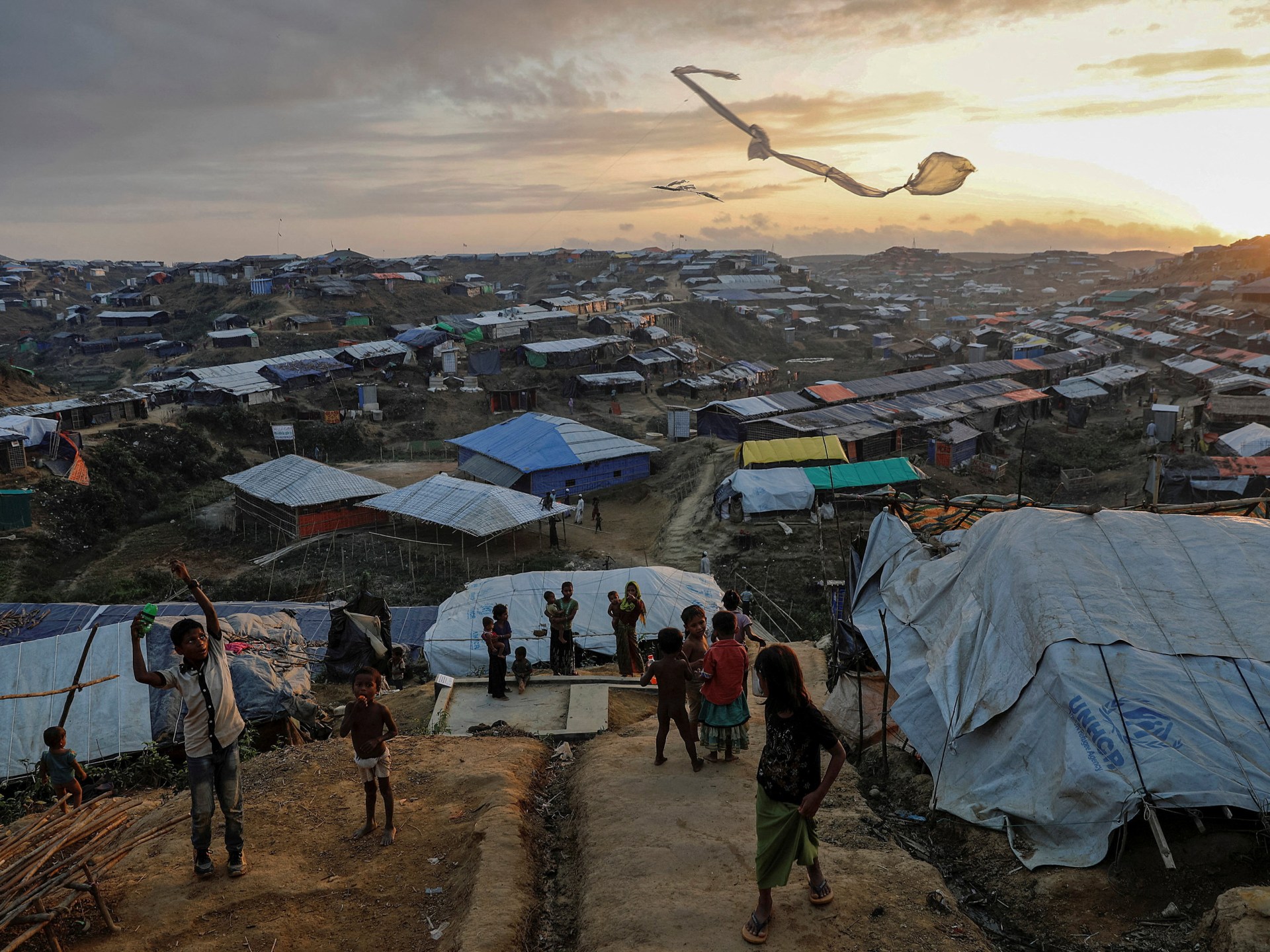
In a landmark decision, the International Court of Justice (ICJ) is poised to rule on allegations that Myanmar committed genocide against its Rohingya Muslim minority. The ruling, scheduled for Thursday, will be the first such judgement by the top United Nations court in over a decade. The case was brought forward by The Gambia, claiming that Myanmar sought to destroy the Rohingya people during a 2017 military crackdown that forced hundreds of thousands to flee. Myanmar, however, maintains it was responding to attacks by the Arakan Rohingya Salvation Army (ARSA) on police posts in Rakhine State.
The violence began in October 2016 and escalated in August 2017 after attacks on police posts by a Rohingya armed group. The United Nations estimates that about 10,000 Rohingya were killed, and 740,000 were forced to flee to Bangladesh during the conflict. UN investigators reported mass killings, the razing of hundreds of villages, and widespread sexual violence against Rohingya women, girls, and boys, indicating genocidal intent.
Myanmar's military has only announced convictions in two cases brought after the violence, with seven soldiers jailed for killing 10 Rohingya men and boys at Inn Din village being freed after serving less than a year of their 10-year sentences. The Rohingya have been excluded from Myanmar's 135 recognized ethnic groups since 1982, making them the world's largest stateless group. Since fighting resumed in 2023, both the military and the Arakan Army, an ethnic Rakhine armed group, have committed widespread and systematic abuses against the Rohingya.
The Gambia brought the case after decades of persecution of the Rohingya that culminated in the 2017 operation, which it argues breached the 1948 Genocide Convention. The Muslim-majority nation filed the case on behalf of the 57-member Organisation of Islamic Cooperation (OIC) in November 2019. The court ordered Myanmar to take emergency measures to prevent genocidal acts in January 2020. A genocide finding would formally recognize the harm inflicted upon the Rohingya. However, it is crucial to note that the ICJ passes judgements on state actions and not on the criminal guilt of individual soldiers or commanders.