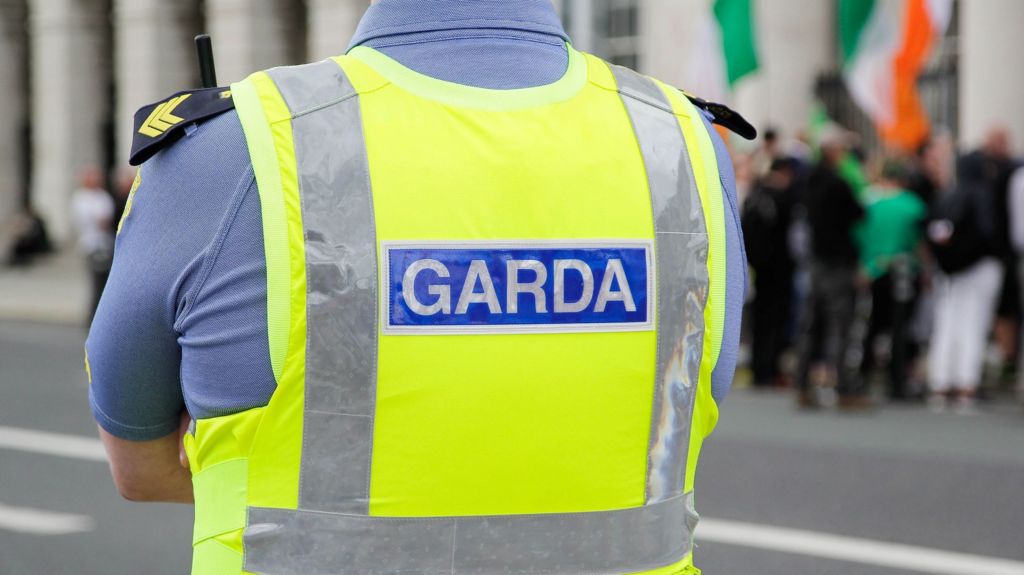
The Police Service of Northern Ireland (PSNI) will lend their support to the gardaí (Irish police) as they oversee a monumental security operation for European Union (EU) meetings taking place in Dublin this week. While foreign officers will not be involved in frontline policing, international law enforcement agencies from Latvia, Portugal, and other nations will assist the Irish authorities. The Policing the European Political Community (EPC) summit on Thursday and the informal meeting of the European Council on Friday mark the largest security operation ever conducted within the republic's history. Notably, hoax bomb threats have been made, with more expected during the event. The Republic of Ireland has held the EU presidency since 1st July and will continue until 31 December.
Garda Commissioner Justin Kelly acknowledged that these upcoming days would pose a significant challenge for the gardai but expressed confidence in their preparedness. "We are addressing a wide range of threats, from hybrid warfare to public order disturbances, to general interference," he said. "However, I am confident we have put adequate preparations in place." Last week, hoax bomb threats were sent to Ireland's public service broadcaster RTÉ, NewstalkFM radio station, and Irish Independent newspaper offices, while several European flights were disrupted due to threats as well.
To manage the immense traffic and travel disruptions that will accompany these events in Dublin, gardaí have deployed an unprecedented amount of personnel. Key locations throughout the city will experience significant congestion, with over 50 international leaders attending the EPC summit on Thursday and numerous other heads of state and government present for Friday's meeting. The public is advised to expect traffic disruptions and plan their travel accordingly.
The policing and security operation, which begins on Tuesday, November 10th, will see temporary traffic restrictions implemented across the wider Dublin region. The highest impact of these restrictions will occur between Wednesday, 11th November, from 13:00 to 23:00 (local time) and Thursday, 12th November, from 7:00 to 11:00, as well as during the city centre hours on Thursday and Friday. The M50 motorway and Dublin Port Tunnel are not expected to be directly affected by these restrictions.
Political leaders will arrive and depart from Dublin Airport during 11th, 12th, and 13th November, with the highest impact occurring between Wednesday, 11th November, from 13:00 to 23:00, Thursday, 12th November, from 7:00 to 11:00, and Friday, 13th November, from 15:00 to 20:00. Normal operations will continue at Dublin Airport, but members of the public are advised to allow extra time for travel during peak hours. Traffic restrictions will be in place at Dunbro between R108 and R122, with additional police patrols along perimeter roads of Dublin Airport.
Casement Aerodrome at Baldonnel, the Irish military airbase, will see heads of state or government arrive and depart during the same timeframe, with the highest level of disruption occurring on Wednesday, 11th November, from 13:00 to 23:00, Thursday, 12th November, from 7:00 to 11:00, and Friday, 13th November, from 13:00 to 20:00. Perimeter roads will be subject to additional patrols and traffic restrictions, with parking and stopping on perimeter roads restricted during these times.
Former One Direction singer Niall Horan is scheduled to perform at the 3Arena for four nights, from 9th to 13th November. The 3Arena will be outside of the security cordon for this operation, but there will be no east/west traffic on North Wall Quay from 10th to 13th November. Cars can still access the 3Arena along Seville Place/Sherriff Street Upper, East Wall Road, and across Tom Clarke Toll Bridge at all times. Luas operations will continue as normal on 10th November 2026, but there may be traffic disruptions in some areas due to the security operation.