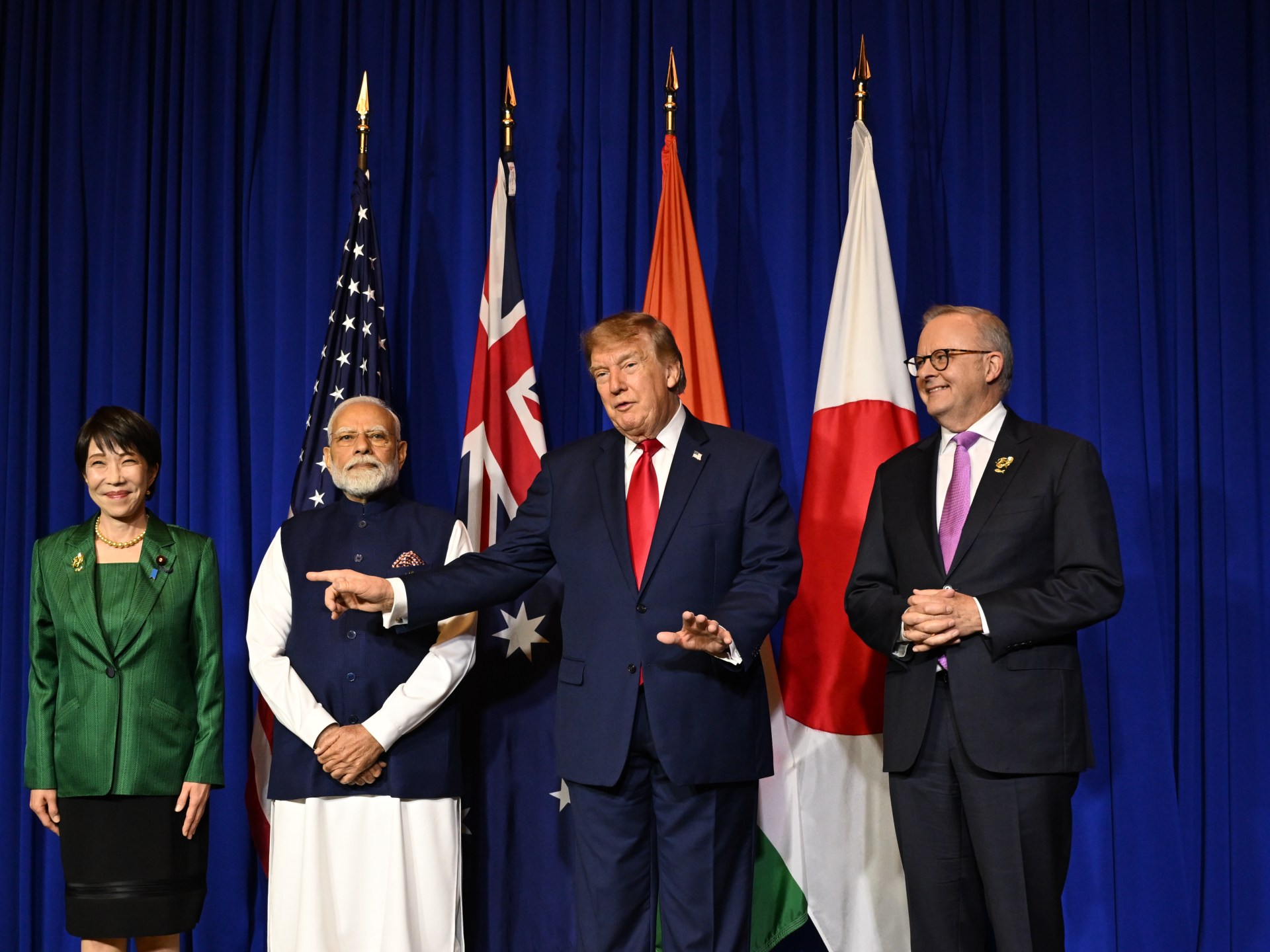
At a meeting held in Manila, the leaders of the Quad - a security grouping comprising the United States, India, Australia, and Japan - announced agreements aimed at securing supply chains for critical minerals. These minerals are essential for manufacturing various products, including electric vehicles and mobile phones. The agreements were stated to counter potential coercion by any single foreign supplier, without explicitly naming China, which dominates global rare earth supplies. US President Donald Trump asserted that the US would achieve self-sufficiency in rare earth production within ten months. This meeting marked Trump's first with the Quad grouping, a significant foreign policy initiative for the Indo-Pacific region. The leaders expressed "grave concerns" about economic coercion, an apparent reference to China's restrictions on exports of rare earths and critical minerals, particularly affecting Japan and India. While the statement did not name any country, it is widely understood that the US and Japan have expressed concerns over these export restrictions imposed by China. The Quad leaders also reaffirmed their commitment to maintaining a free, open, stable, and prosperous Indo-Pacific region.
On the same day, Trump attended a summit of the Association of Southeast Asian Nations (ASEAN) in Manila, marking the first day of his three-day trip to Asia. Subsequently, he is scheduled to travel to China and attend the Asia-Pacific Economic Cooperation (APEC) forum in Shenzhen. During this visit, a trilateral meeting with Russian President Vladimir Putin and Chinese President Xi Jinping is expected. According to the Chinese Ministry of Foreign Affairs, the talks will focus on topics of "groundbreaking significance," including safeguarding world peace.
In response to a report claiming that US intelligence had determined Tehran was developing plans for a so-called "dirty bomb" targeting officials in the Trump administration, Trump stated he was "looking into it." If Iran posed an "imminent threat" to Washington, Trump threatened severe retaliation. However, he expressed hope that Iran did not pose a threat and took such a scenario "very seriously" due to concerns about their unpredictable behavior. The Iranian Foreign Ministry spokesperson Esmaeil Baghei responded by stating that those who had initiated aggression against Iran were now attempting to create a media narrative surrounding an alleged "dirty bomb."
During a meeting held in Manila, the leaders of the Quad - a security alliance comprising the United States, India, Australia, and Japan - announced agreements intended to secure supply chains for critical minerals. These minerals are crucial for manufacturing various products, including electric vehicles and mobile phones. The agreements were designed to counter potential coercion by any single foreign supplier without explicitly naming China, which dominates global rare earth supplies. US President Donald Trump asserted that the US would achieve self-sufficiency in rare earth production within ten months. This meeting marked Trump's first with the Quad grouping, a significant foreign policy initiative for the Indo-Pacific region. The leaders expressed "grave concerns" about economic coercion, an apparent reference to China's restrictions on exports of rare earths and critical minerals, particularly affecting Japan and India. While the statement did not name any country, it is widely understood that the US and Japan have expressed concerns over these export restrictions imposed by China. The Quad leaders also reaffirmed their commitment to maintaining a free, open, stable, and prosperous Indo-Pacific region.
On the same day, Trump attended a summit of the Association of Southeast Asian Nations (ASEAN) in Manila, marking the first day of his three-day trip to Asia. Subsequently, he is scheduled to travel to China and attend the Asia-Pacific Economic Cooperation (APEC) forum in Shenzhen. During this visit, a trilateral meeting with Russian President Vladimir Putin and Chinese President Xi Jinping is expected. According to the Chinese Ministry of Foreign Affairs, the talks will focus on topics of "groundbreaking significance," including safeguarding world peace.
In response to a report claiming that US intelligence had determined Tehran was developing plans for a so-called "dirty bomb" targeting officials in the Trump administration, Trump stated he was "looking into it." If Iran posed an "imminent threat" to Washington, Trump threatened severe retaliation. However, he expressed hope that Iran did not pose a threat and took such a scenario "very seriously" due to concerns about their unpredictable behavior. The Iranian Foreign Ministry spokesperson Esmaeil Baghei responded by stating that those who had initiated aggression against Iran were now attempting to create a media narrative surrounding an alleged "dirty bomb."
In a meeting held in Manila, the leaders of the Quad - a security alliance comprising the United States, India, Australia, and Japan - announced agreements aimed at securing supply chains for critical minerals. These minerals are crucial for manufacturing various products, including electric vehicles and mobile phones. The agreements were designed to counter potential coercion by any single foreign supplier without explicitly naming China, which dominates global rare earth supplies. US President Donald Trump asserted that the US would achieve self-sufficiency in rare earth production within ten months. This meeting marked Trump's first with the Quad grouping, a significant foreign policy initiative for the Indo-Pacific region. The leaders expressed "grave concerns" about economic coercion, an apparent reference to China's restrictions on exports of rare earths and critical minerals, particularly affecting Japan and India. While the statement did not name any country, it is widely understood that the US and Japan have expressed concerns over these export restrictions imposed by China. The Quad leaders also reaffirmed their commitment to maintaining a free, open, stable, and prosperous Indo-Pacific region.
On the same day, Trump attended a summit of the Association of Southeast Asian Nations (ASEAN) in Manila, marking the first day of his three-day trip to Asia. Subsequently, he is scheduled to travel to China and attend the Asia-Pacific Economic Cooperation (APEC) forum in Shenzhen. During this visit, a trilateral meeting with Russian President Vladimir Putin and Chinese President Xi Jinping is expected. According to the Chinese Ministry of Foreign Affairs, the talks will focus on topics of "groundbreaking significance," including safeguarding world peace.
In response to a report claiming that US intelligence had determined Tehran was developing plans for a so-called "dirty bomb" targeting officials in the Trump administration, Trump stated he was "looking into it." If Iran posed an "imminent threat" to Washington, Trump threatened severe retaliation. However, he expressed hope that Iran did not pose a threat and took such a scenario "very seriously" due to concerns about their unpredictable behavior. The Iranian Foreign Ministry spokesperson Esmaeil Baghei responded by stating that those who had initiated aggression against Iran were now attempting to create a media narrative surrounding an alleged "dirty bomb."