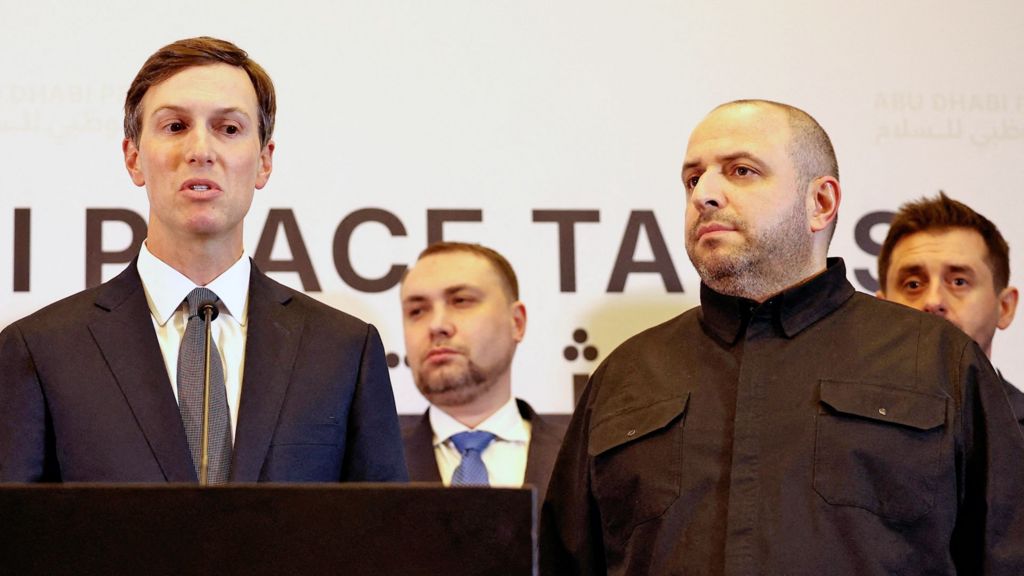
In the United Arab Emirates city of Abu Dhabi, Russia, Ukraine, and the United States held two days of talks aimed at ending the ongoing conflict in Ukraine. Despite signs of potential progress, no breakthrough was reached to end the nearly five-year war that started following Russia's invasion. The discussions centered around a potential new security architecture for Europe. For Kyiv, this could mean assurances from allies about coming to its aid if under attack, despite Ukraine not being a NATO member. Moscow, on the other hand, is likely to seek limits on NATO's influence in eastern Europe, a concern for the Kremlin since the alliance's eastward expansion.
Following these talks, it was announced that US negotiators Steve Witkoff and Jared Kushner - President Donald Trump's son-in-law - would travel to Moscow to meet with Russian President Vladimir Putin, and then to Dublin to speak with Ukraine's Volodymyr Zelensky. Representatives from Britain, NATO, and various EU countries were also present in Abu Dhabi for the talks, but the Kremlin stated that it had not communicated with them officially.
The discussions on a potential future security framework have been contentious, with disagreements over whether a ceasefire should precede these discussions or if fighting should only stop after an agreement has been reached. Any peacetime security framework is contingent on the war ending, but this cannot occur until there is an agreement on territory and other bilateral issues, according to Kushner. The eastern Ukrainian region of Donetsk, largely occupied by Russia, remains a core obstacle to any settlement, with Moscow demanding that Ukraine relinquish parts of Donetsk it still holds, while Kyiv wants to freeze the contact line to maintain control over those areas.