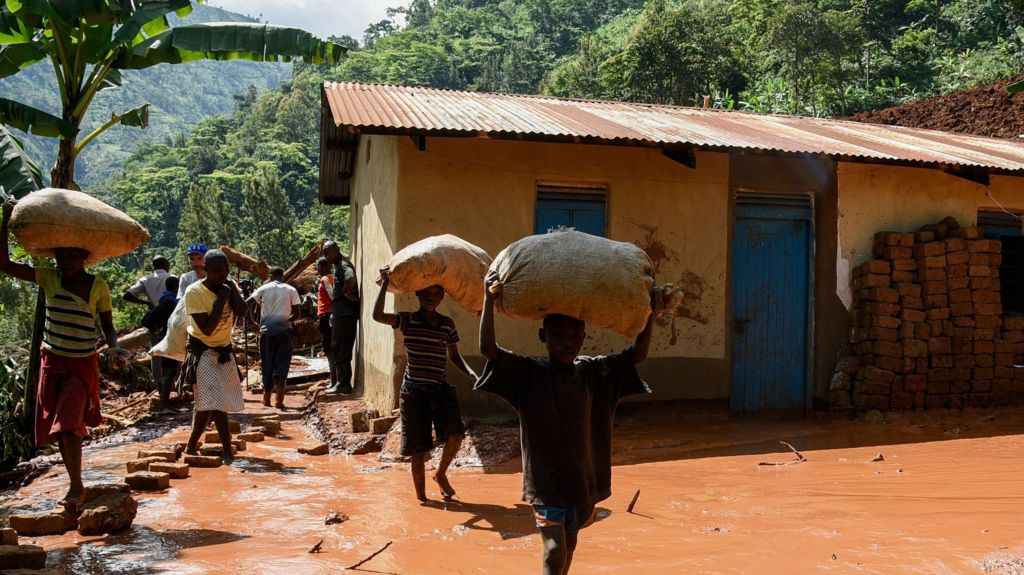
Survivors of a devastating landslide in Uganda's Bududa district, which occurred in 2019 and claimed over 53 lives, have taken their demand for relocation and compensation to the United Nations. The group of 48 complainants accuse the government of disregarding their safety, land rights, and livelihoods by failing to enforce adequate disaster management measures, despite Bududa's susceptibility to landslides. The case is believed to be the first seeking climate adaptation measures globally, potentially setting a significant precedent.
The survivors contend that the government's relocation program overlooks their safety and livelihood concerns, as well as their constitutional rights. They allege that Uganda's resettlement plan, introduced in 2011, has seen limited progress, with few residents relocated. Last month, the government launched a new resettlement program offering affected households around $4,300 to move to safer areas, but some survivors question if this amount is sufficient for relocation and rebuilding their lives.
Under the program, families can choose between receiving two acres of land or a cash equivalent, along with funds towards building a house. The scheme is expected to benefit 1,410 households identified as living in high-risk areas. Residents of designated high-risk areas have been given until December to leave or face forced eviction. Besides landslides, the complainants argue that changing rainfall patterns and declining soil fertility have also affected farming, jeopardizing many families' livelihoods.
The survivors initially filed legal action in Uganda in 2020, receiving support from Ugandan environmental organization Greenwatch three years later. They seek compensation for lost family members and livelihoods, as well as emergency measures, including accessible early-warning systems in high-risk areas. The case aims to change how governments prepare and respond to climate-related disasters, ensuring that loss and damage are no longer afterthoughts in disaster management.
The threat of climate-related disasters is not exclusive to Uganda; neighboring countries such as Kenya and Rwanda have also experienced similar tragedies. In Nepal, a flash flood caused by a landslide in 2026 resulted in over 1,500 deaths. Climate change exacerbates these disasters, which are occurring worldwide, as demonstrated recently in Nepal. High-income countries need to provide financial support and ensure that sufficient funds go directly to countries like Uganda for life-saving adaptation measures.
The survivors demand more than just relocation; they want the government to protect their livelihoods, respect their land rights, and address individual needs. The case is now before the United Nations Human Rights Committee, which will ask the Ugandan government to respond within six months. For more news from the African continent, visit BBCAfrica.com. Follow us on Twitter @BBCAfrica, Facebook at BBC Africa, or Instagram at bbcafrica.