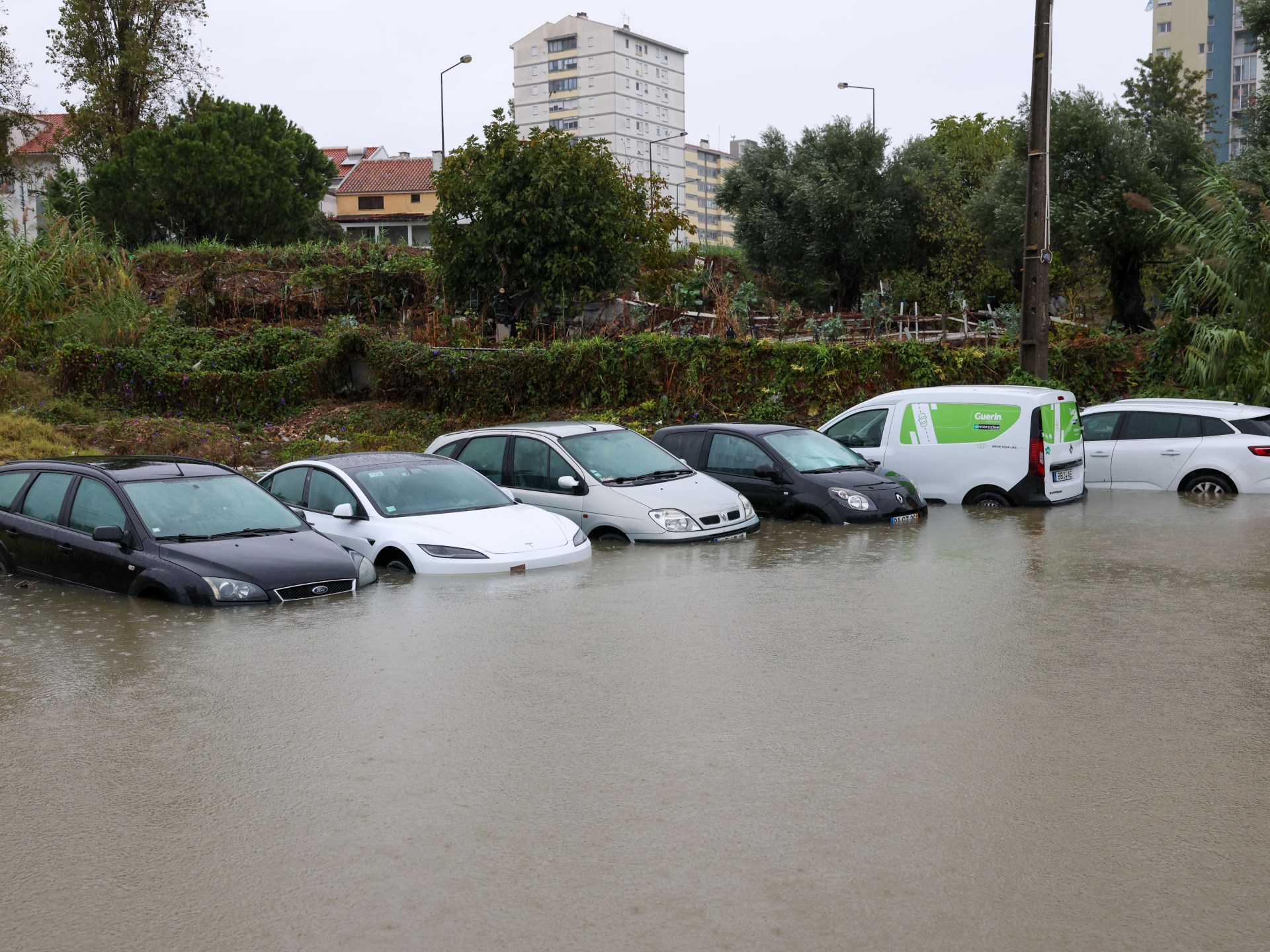
In an effort to mitigate the impact of the approaching Atlantic storm, authorities in Portugal took preventive measures, cancelling over 300 flights and closing schools nationwide. The shutdown occurred on Wednesday, affecting four international airports, hundreds of supermarkets, and non-essential public services across the country. This was the first time in living memory that so many schools were closed due to a significant Atlantic storm forecast. As Storm Charles approached Portugal's mainland, streets were largely deserted as the government urged residents to stay at home, fearing severe damage. The national weather agency, IPMA, reported wind gusts of over 120km/h (75mph) in certain areas. Lisbon saw buses without passengers navigating flooded streets due to clogged drains. A national supermarket chain closed its stores, while the Web Summit technology conference in Lisbon postponed events. By mid-afternoon, only the southern Algarve region remained on red alert, initially covering more than half of the country. Storm Charles had previously hit the Portuguese island of Madeira with winds of 130km/h (81mph) on Tuesday. Criticism was directed towards the government's response to January's Storm Kristin, which caused widespread property damage in central Portugal and felled thousands of trees. In February, a 70-year-old man died due to flooding in the southern region of Alentejo after Storm Leonardo. A crisis unit headed by Prime Minister Luis Montenegro was established to monitor the storm, with eight government ministers and other officials present. Interior Minister Luis Neves defended the authorities' response, stating it was in accordance with the weather forecast. Storm Charles was forecast to move later into Spain, where a general strike occurred on Wednesday. Demonstrations were cancelled or postponed in some southern cities due to the strike.
---
SUMMARY (cont'd):
Storm Charles brought heavy rainfall and intense winds to Portugal, but without causing severe damage. The government's preparatory measures ensured minimal disruptions, with businesses and schools closing before the storm hit. The shutdown affected airports, supermarkets, and public services across the country, marking a historic event in Portuguese education as over 8,000 schools cancelled classes. The streets were deserted when Storm Charles arrived, as the government had advised residents to stay at home due to concerns about potential damage. Lisbon saw buses driving through flooded streets, while some stores remained closed and events were postponed or cancelled.
---
SUMMARY (cont'd):
Storm Charles had previously hit the Portuguese island of Madeira with winds reaching 130km/h (81mph) on Tuesday. The government faced criticism following January's Storm Kristin, which caused widespread property damage in central Portugal and felled thousands of trees. In February, a 70-year-old man died due to flooding in the southern region of Alentejo after Storm Leonardo. To address these concerns and monitor the situation, a crisis unit was established by Prime Minister Luis Montenegro, with eight government ministers and other officials present. Interior Minister Luis Neves defended the authorities' response, stating it was in accordance with the weather forecast.
---
SUMMARY (cont'd):
As Storm Charles moved towards Spain, workers staged a general strike on Wednesday. Strike organisers cancelled or postponed demonstrations in some southern cities, including Cordoba, Huelva, and Cadiz. The government's preventive measures and residents' compliance ensured that Portugal largely avoided severe damage from Storm Charles. Despite the storm passing without significant incident, the government's response to previous weather events remains a subject of debate and criticism.