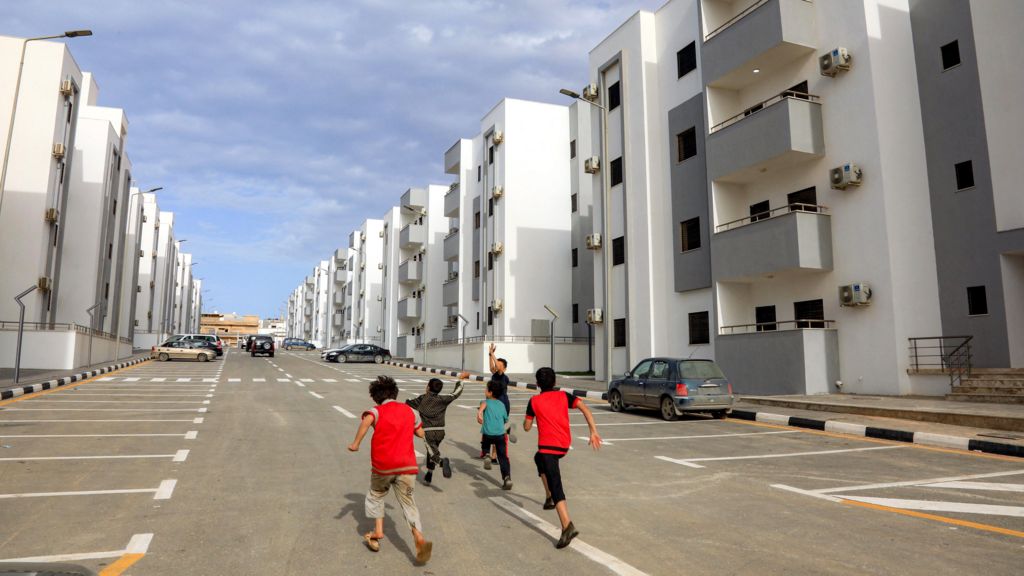
In the eastern city of Derna, Libya, a remarkable reconstruction project has taken place, three years after devastating floods left the community in ruins. The rebuilding process is being used as a showcase for the rule of Khalifa Haftar and his son, with a $2bn investment intended to serve as a model for development across Libya. The money comes from the state coffers, allocated by the country's parliament, but questions about accountability and potential corruption linger due to the lack of published records detailing how the funds have been spent. One of the beneficiaries is Abdulwahab Damdoum, a 27-year-old port worker who has received a new, free, 300-sq-m home as part of a showcase development commissioned by Belkacem Haftar, Khalifa's son. The project includes a new mosque, hospital, shopping mall, schools, roads, and bridges, with Hussein el-Mansory, the project manager, stating that it is the first time such large projects have been built in Libya since 2011. However, not all survivors have been rehoused yet; Izz al-Nasr Ibzeou, a marine science lecturer who lost his entire family during the floods, still awaits full restoration of his home due to having an undamaged apartment in another part of town. Portraits of Belkacem Haftar and other family members are displayed prominently throughout Derna, symbolizing their growing influence in the region.
The city of Derna, Libya, has undergone a significant reconstruction following devastating floods in 2023. The project is being spearheaded by Belkacem Haftar, son of warlord Khalifa Haftar, who controls eastern Libya. The $2bn investment in the city's rebuilding is intended to serve as a model for development across the country and bolster the Haftar family's influence. Funding comes from the state coffers, with no published records detailing how the money has been spent, raising questions about accountability and potential corruption. One of the beneficiaries of the project is Abdulwahab Damdoum, a port worker who received a luxurious new apartment overlooking the Mediterranean Sea. The development includes new infrastructure such as a mosque, hospital, shopping mall, schools, roads, and bridges, with Hussein el-Mansory, the project manager, stating that it is the first time such large projects have been built in Libya since 2011. However, not all flood survivors have been rehoused; Izz al-Nasr Ibzeou, a marine science lecturer who lost his entire family during the floods, still awaits full restoration of his home due to having an undamaged apartment in another part of town.
A massive reconstruction project is underway in Derna, Libya, following devastating floods that left the city in ruins three years ago. The $2bn investment in the rebuilding effort is being led by Belkacem Haftar, son of warlord Khalifa Haftar, who controls eastern Libya. The project aims to serve as a model for development across the country and increase the Haftar family's influence. Funding comes from the state coffers, allocated by the country's parliament, but concerns about accountability and potential corruption arise due to the lack of published records detailing how the money has been spent. One survivor benefiting from the project is Abdulwahab Damdoum, a port worker who received a new, free, 300-sq-m home as part of a showcase development in Derna. The development includes infrastructure such as a mosque, hospital, shopping mall, schools, roads, and bridges. However, not all flood survivors have been rehoused; Izz al-Nasr Ibzeou, a marine science lecturer who lost his entire family during the floods, still awaits full restoration of his home due to having an undamaged apartment in another part of town. The absence of transparency surrounding the allocation and use of funds has raised concerns about corruption and accountability in Libya's post-flood reconstruction effort.